
Inside Wesleyan’s Latest Campus Improvements
Over the last year, Wesleyan’s Facilities Department—the team responsible for the repair, maintenance, cleaning and operation of all buildings and grounds—has been hard at work to complete the Casper Life Sciences Building, address key maintenance needs, and improve the efficiency of campus heating, among other projects.
“We've demonstrated Wesleyan's commitment to supporting pedagogy, the environment, and residential life on campus through our continued wood frame improvements, renovation projects, and major projects like the completion of the Frank Center for Public Affairs, the Casper Life Sciences Building, and, renovations of Shanklin which start this fall,” said Alan Rubacha, associate vice president of facilities.
Casper Life Sciences Building
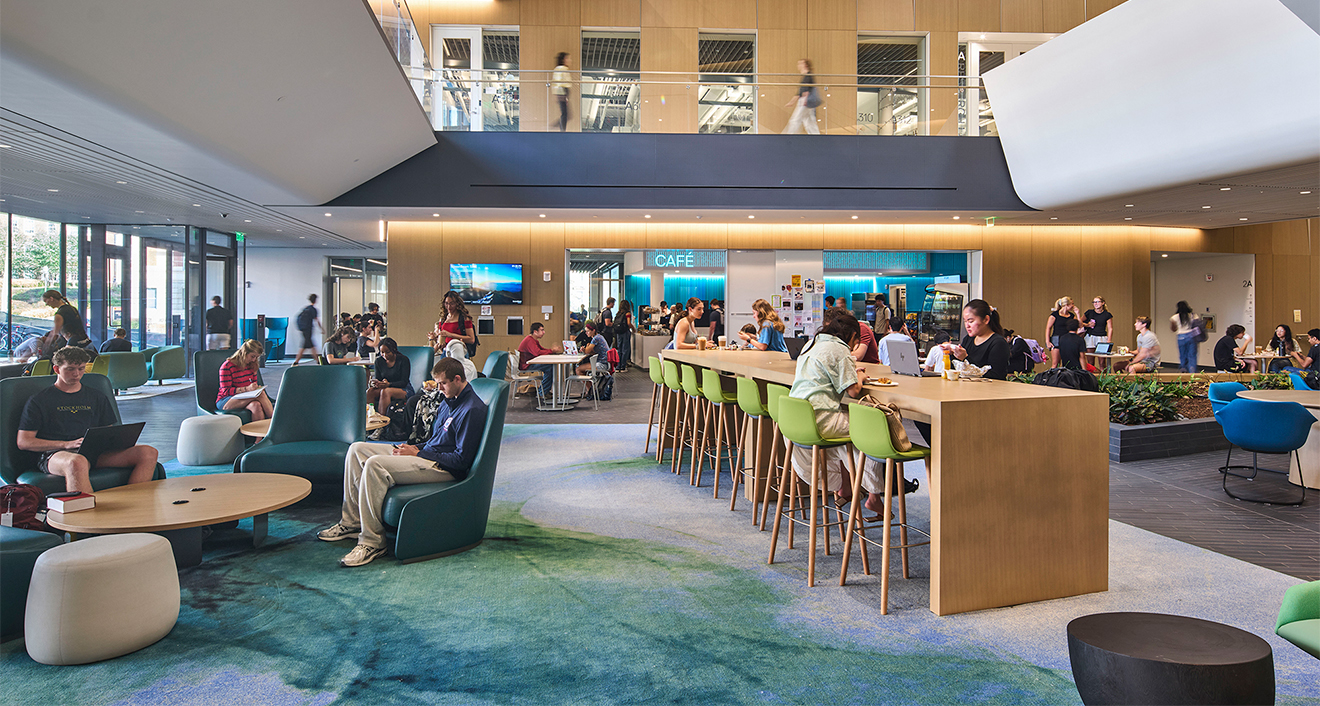
This summer, the Casper Life Sciences Building was officially opened and faculty from biology, chemistry, and molecular biology and biochemistry now occupy their offices and research spaces. Students have taken classes and done research in the building for the first time. Rubacha called the building’s opening a success.
“It’s exciting that it’s open and it’s done. Students found it on the first day and it looks like it's doing what we wanted it to do, which is attracting people, allowing people to gather, have formal and informal conversations, meetings, classes, and labs,” he said.
Located on the southwest corner of campus near Church Street and Lawn Avenue, Casper contains 39 research and support labs, nine teaching labs, seven classrooms, a vivarium, a greenhouse, faculty and department offices, conference rooms, and the Pi2 Café. The energy efficiency the new building brings to campus is an important piece of Wesleyan’s efforts to meet its carbon reduction goals, with estimates that Casper uses less than half of the energy per year as compared to Hall-Atwater.
Shanklin and Hall-Atwater
At its most recent meeting, the Board of the Trustees approved plans for the renovation of Shanklin Laboratories and demolition of Hall-Atwater Laboratories.
Currently, Shanklin is home to the biology department, but following the renovation it will house the Bailey College of the Environment (COE) and the College of Integrative Sciences (CIS), which currently reside at 284 High St. and Hall-Atwater, respectively.
CIS will be stationed on the ground floor, with four program offices, a large multipurpose room, a conference room, open lounge and study space, and storage. COE will be split among the top two floors, with 36-person and 20-person classrooms, a seminar room, rooms for student organizations and thesis work, seven faculty offices, six think-tank offices, and open lounges. During its renovations, Facilities will also lower the grade of Shanklin and make accessibility improvements to its western entrance.
Hall-Atwater will be demolished in the spring of 2027. A small parking lot is scheduled for installation following the demolition of Hall-Atwater. Abatement and renovation efforts in Shanklin are scheduled to be completed by the end of 2029.
Student Housing and Campus Planning
Campus student housing is one of the top priorities of Facilities and its planning efforts, Rubacha said. They are currently selecting sites for additional housing options, partly to replace the Low Rise Apartments on William Street. Alongside this, they are also working on studying how to best use Exley.
“We want to do a classroom utilization study,” Rubacha said. “One of the exciting things about the Casper Life Sciences Building is it brought eight new classrooms on campus. And we want to study how classroom utilization has changed on campus.”
Major Maintenance
Among Facilities’ key projects are several smaller-scale maintenance efforts that help to keep campus running smoothly.
Citrin and Andrus Field
-
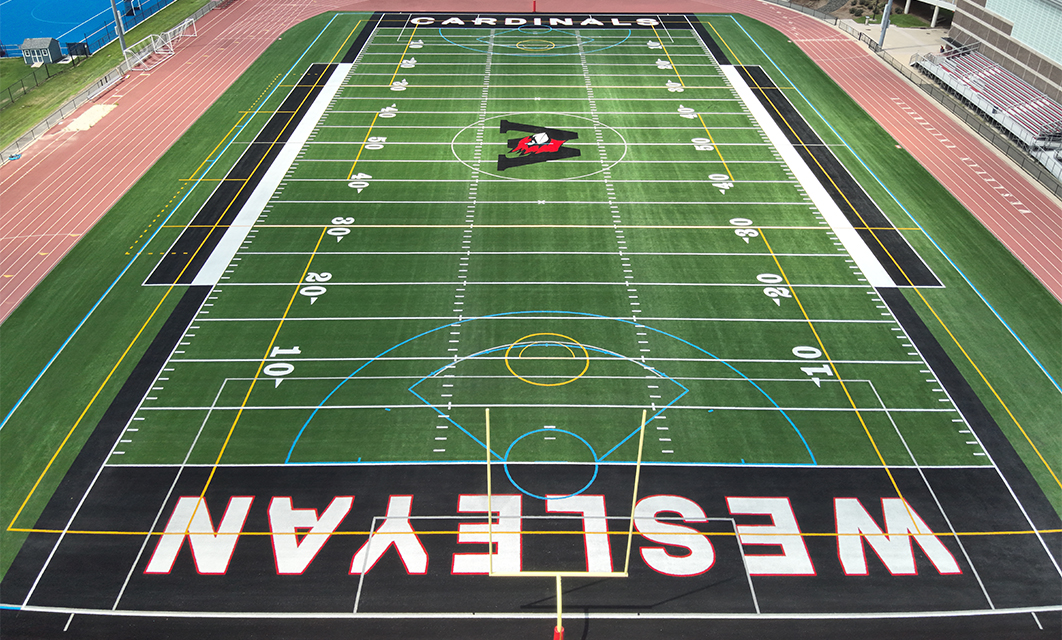
Citrin Field near Freeman Athletic Center. (Photo courtesy of the Facilities Department)
-
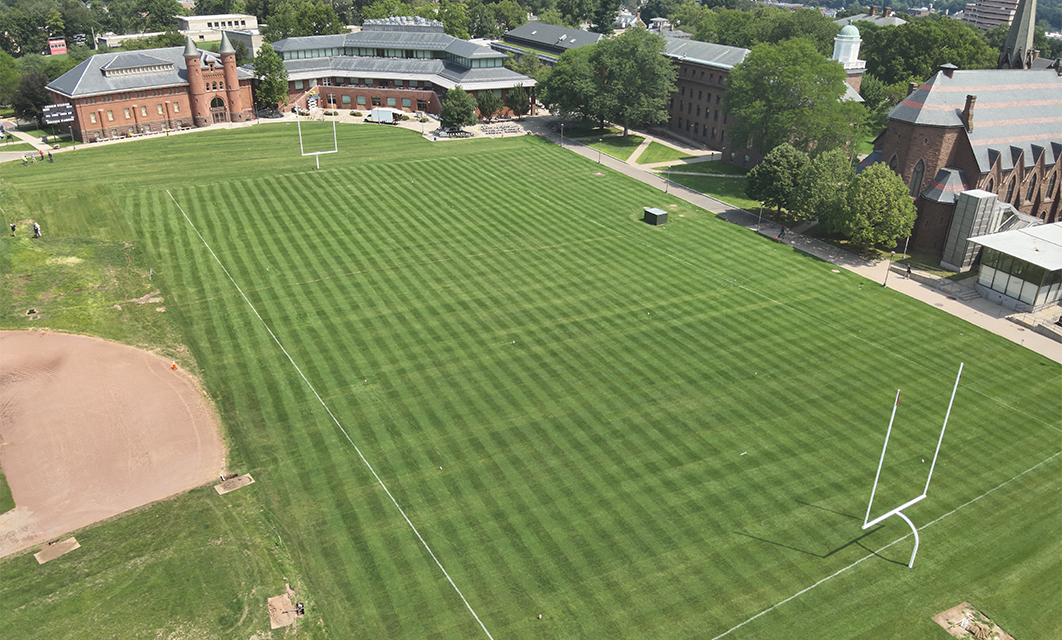
Andrus Field near the center of campus. (Photo courtesy of the Facilities Department)
This summer, they replaced the turf at Citrin Field near Freeman Athletic Center and the grass at Andrus Field in the center of campus. Within those projects, they addressed the grade and drainage systems of the two fields. Facilities also renovated Romance Languages’ building at 300 High St., re-did two rooves in the Center for the Arts and the roof at 95 Pearl St., home to the Center for Humanities. They also repaved parking lots around campus, including portions of Vine Street and near Hewitt 8, formerly known as Mocon Circle.
Next year Facilities plans to replace the arch windows in Olin Memorial Library that face Andrus Field; update the roof at 44 Hamlin St.; fix the lighting and theater rigging at Patricelli ’92 Theater; make upgrades at Russell House; and renovate 200 College St. and 65 Pearl St. They will also replace the refrigeration unit that forms the ice at Spurrier-Snyder Rink, he said. Finally, the cogeneration equipment located in the central power plant that makes electricity for campus will be overhauled early in 2027.
Hot Water Conversion
Wesleyan’s long-term heating and domestic hot water conversion project, which replaces the older steam heating system with a campus-wide hot water system, will hit a milestone phase this semester. This month, Facilities will start up hot water boilers installed this summer at the central power plant on Williams St., which will provide heat and hot water for the three-quarters of campus that has been converted campus. The new boilers replace one of the three steam boilers.
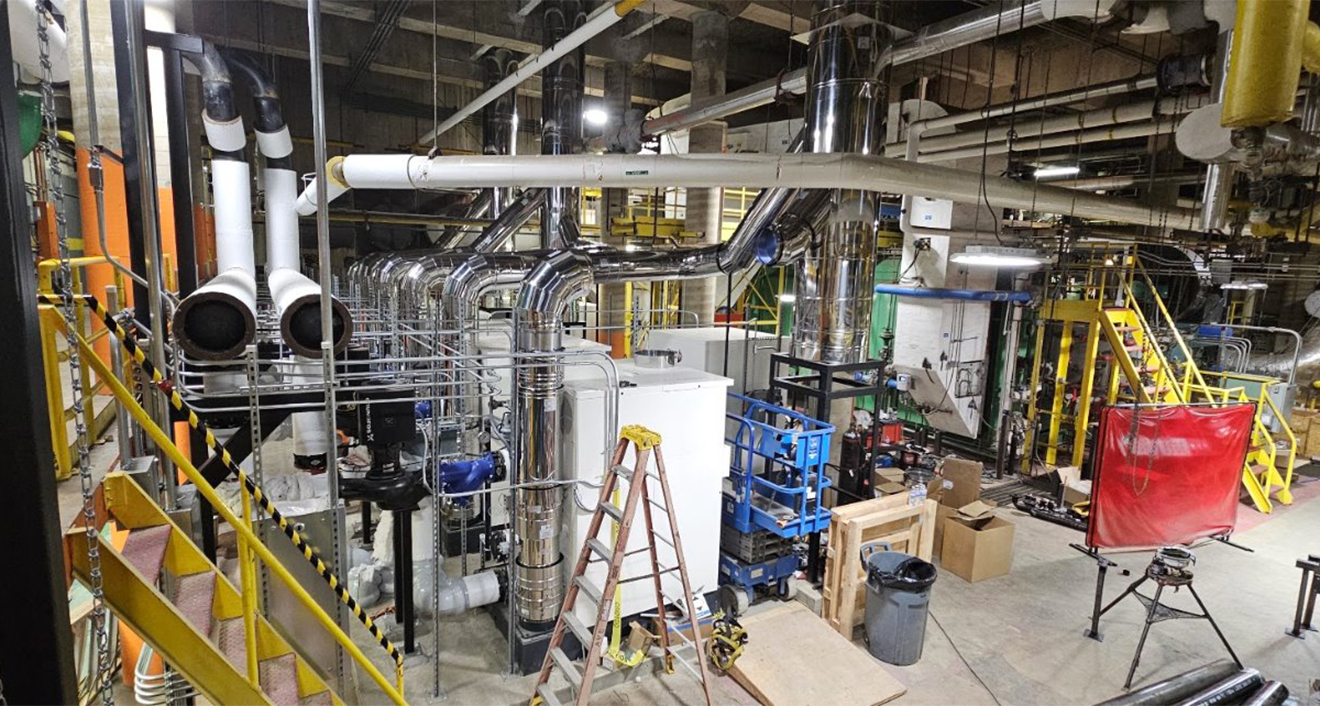
The installation of the boilers marks the completion of eight of 10 total phases, with updates to Exley Science Center, the Science Library, the Butterfields, and the central power plant remaining. The project is scheduled to be completed in 2029.
“The hot water loop used to simply convert steam to hot water in the plant, but now the hot water loop will be fed by condensing hot water from boilers, which are dramatically more efficient than steam boilers,” Rubacha said.
Over the course of the project, over 10,000 feet of aging steam and condensate pipes have been replaced. The system upgrade has improved the efficiency of Wesleyan’s heating systems and provides access to newer renewable thermal energy technology in the future.
Long Lane Remediation
Wesleyan’s remediation of Long Lane property purchased from the State of Connecticut in 1999 is progressing well, Rubacha said. The west side of Long Lane is now completely remediated, and Facilities has shifted its focus toward reconfiguring the stream on-site to restore a natural water flow to the wetlands south of the Freeman Athletic Center. From here, they need to finish the stream and redistribute soil, which will likely be completed in the Fall of 2027.