
Author Inspires First-Year Students with Story of Healing and Activism
For more than two decades, first-year students at Wesleyan have shared the common experience of collectively reading a book or watching a film prior to the start of classes. The goal of the First Year Matters (FYM) program is to use the assignment and subsequent talk to introduce all new students to intellectual life on campus.
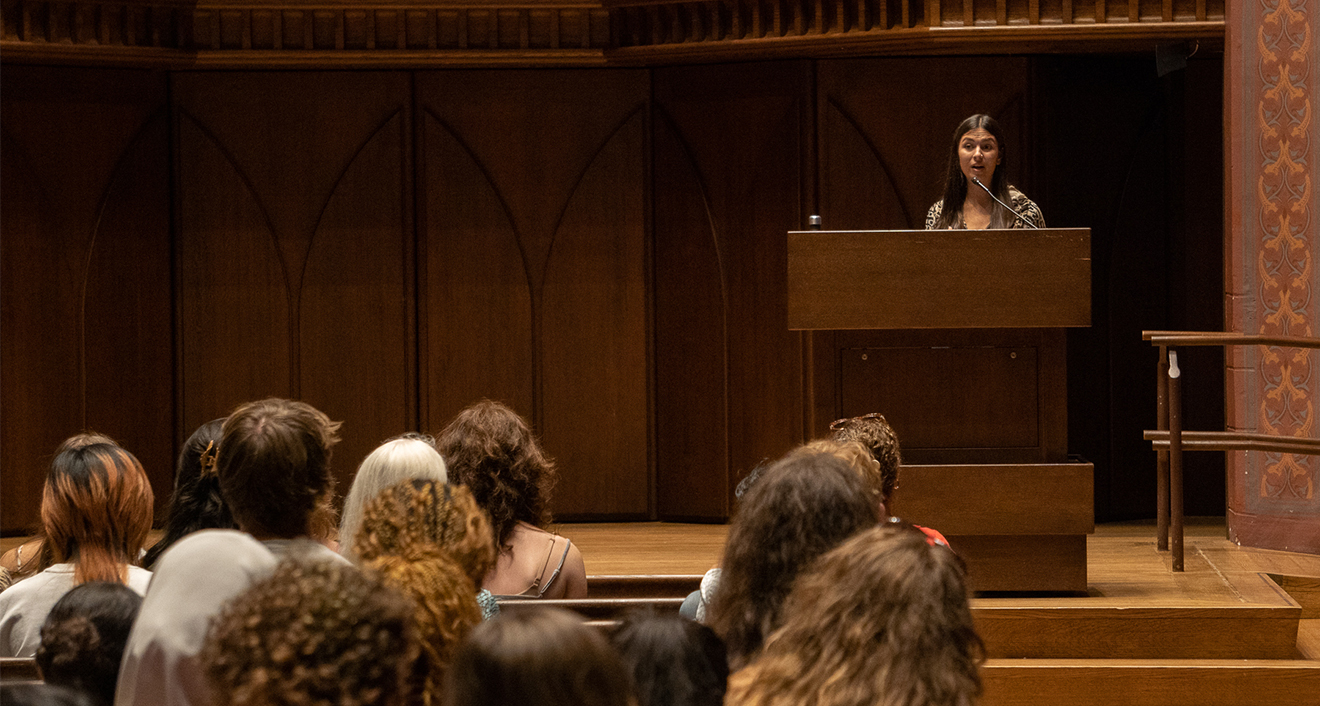
For the Class of 2030, the FYM committee selected the book Birdgirl: Discovering the Power of our Natural World by Mya-Rose Craig. On Friday, Sept. 4, in Memorial Chapel, Associate Dean of Students Kevin Butler introduced Craig as “a prominent birder, naturalist, conservationist, environmentalist, race activist, writer, speaker, and broadcaster.” He explained that Craig had started writing a blog, also called Birdgirl, at the age of 11. This popular forum reached millions and was only the beginning of an already storied career that has taken Craig to all seven continents, and gained her global news coverage, awards, and recognition.
Craig began her talk by detailing the process for writing her memoir. She started writing Birdgirl, the second of her three books, at age 18. It was during the COVID-19 pandemic, so she had plenty of time at home to write. She focused initially on explaining why she enjoyed birdwatching, but through the process of writing, the book took on a broader focus.
“I had to sit down and say, ‘what are the feelings of my life?’ I kind of decided it was the things that were most important to me,” she said to the audience of first-year students who were not much younger than her. “So it was a love of nature, the responsibility that we have towards the world around us, but kind of also resilience and family.”
She wrote about issues her family had not really discussed, including her mother’s bipolar illness. While challenging, exploring this part of her family’s history turned out to be eye-opening and therapeutic, she said. “At the time I had never connected my love of nature, my loved of birds, to my mum's illness, my family's struggles, and as I was writing it all kind of came together and it's what helped me to realize why I care about birds and nature so much,” said Craig.
“It's not just that I like being outside, it's not just a hobby; it's in their meeting during every period of my life, every struggle. And I think it made me understand from a very young age that our relationship with nature is reciprocal.” Being outdoors, for example, reduces the incidence of anxiety and depression by 20 percent, she said.
Another theme in the book is race. As a British-Bangladeshi person, Craig has often felt “othered” by both sides of her background. Traveling around the world, she came to recognize that every country has different racial politics and different languages to describe race. This led her to name her charity, which works to expose children and young adults from “Black Minority Ethnic” communities to the natural world, Black2Nature.
Through the charity, Craig does a lot of outreach to explain why people should care about the environment when problems like cost of living seem most urgent. “It's very easy to feel as though climate change is something that affects other people on the other side of the world and in reality, it is affecting every single one of us, every single day,” she said. In talking to people, she cites examples like urban flooding in Bangladesh or Southwest England, or drought in Sudan. “That's what makes climate change real, quick.”
In addition to raising awareness about the value of nature and taking an intersectional approach to protecting the environment, Craig encouraged her audience to be active in whatever way they can. “I would argue that to be an activist, you just have to be doing, you have to be taking action, you have to be doing the activity,” she said. Craig emphasized taking steps locally, such as applying pressure to local politicians or planting trees in your area.
Despite the challenges of being engaged civically over time as she has, Craig concluded her talk by saying, “I want all of you guys to think about the change that you can create and the kind of things that you can do.”
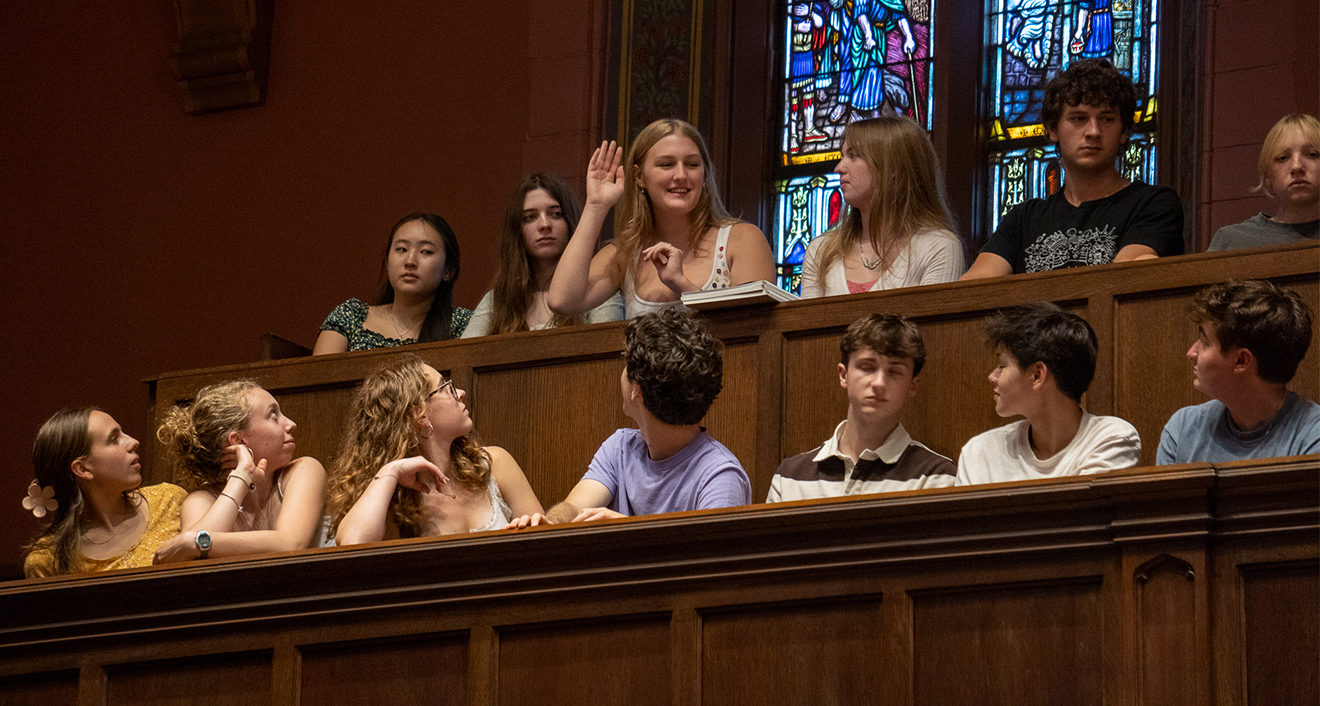
Micah Wolfensohn ’30 of New York, who was one of a number of students to pose questions during the Q&A portion of the talk, had several takeaways from the experience. “I got the importance of keeping going, be it fighting mental health or be it fighting climate change,” he said. “I think that overcoming adversity is an inherently human need and I think Dr. Craig really exemplifies that in the truest sense of the word. I'm really inspired by the work that she's done.”