Panel Examines Religion’s Place in Democracy and Public Life
What place should religion have in a pluralistic democracy, and how can faith both strengthen democratic life and challenge its ideals? The Democracy250 Speaker Series hosted a panel discussion, entitled “The Place of Religion in a Pluralistic Democracy,” which sought to answer these critical questions.
Three panelists—Kelsey Hanson Woodruff, postdoctoral fellow in Wesleyan's Center for the Study of Guns and Society; Philippe Andal, visiting professor of public policy; and Adrian Weimer, professor of history at Providence College—discussed the role of religion within a democracy. Their conversation began at the creation of the American nation state, culminating in a discussion of the current debates surrounding religious freedom, political participation, and the relationship between faith and public life. The panel was moderated by government major Lily Turner ’27 and Charlie McGill ’25, Democracy250 program fellow, and the event was co-sponsored by the Allbritton Center for the Study of Public Life and the Democracy250 initiative.
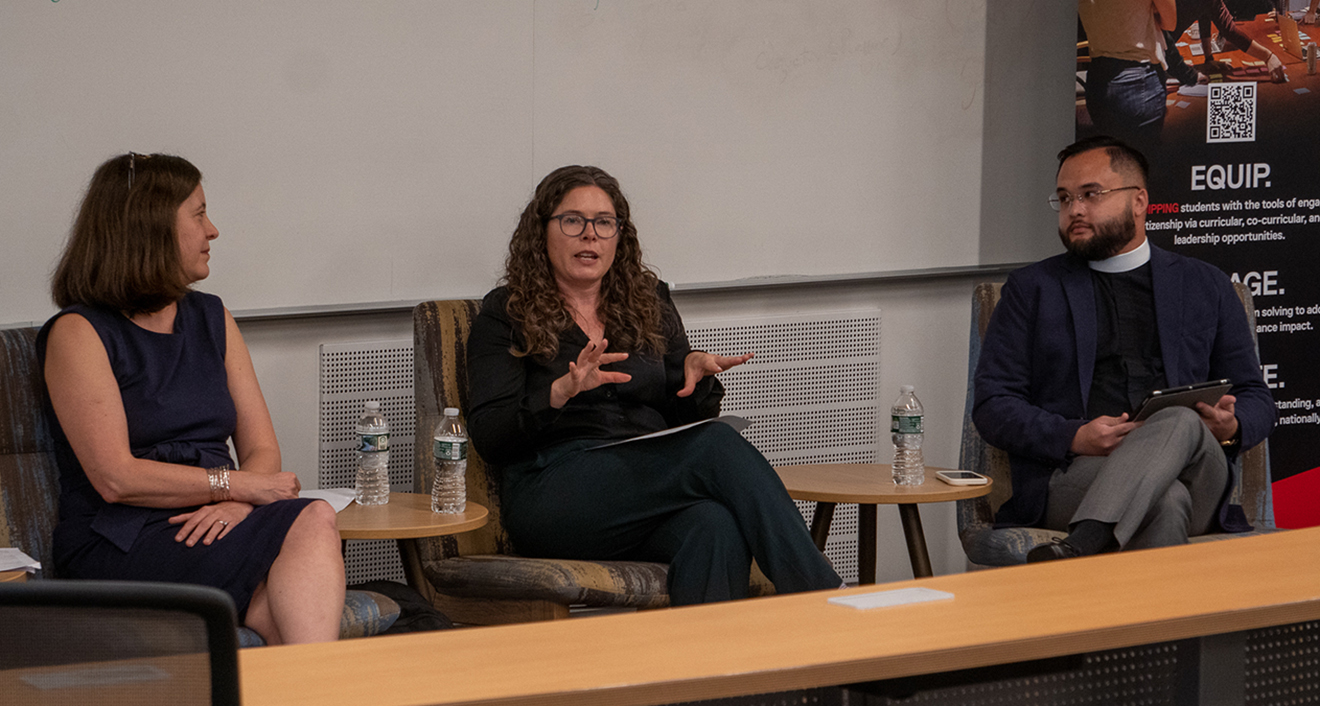
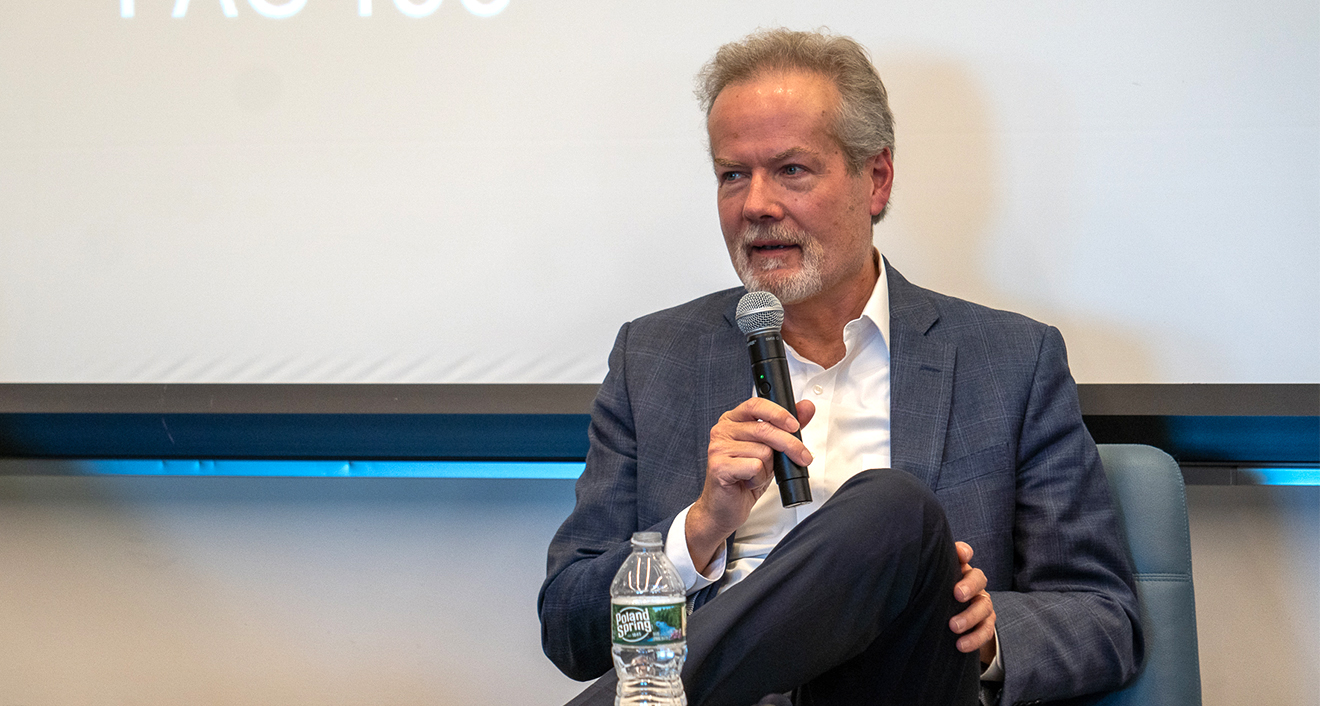
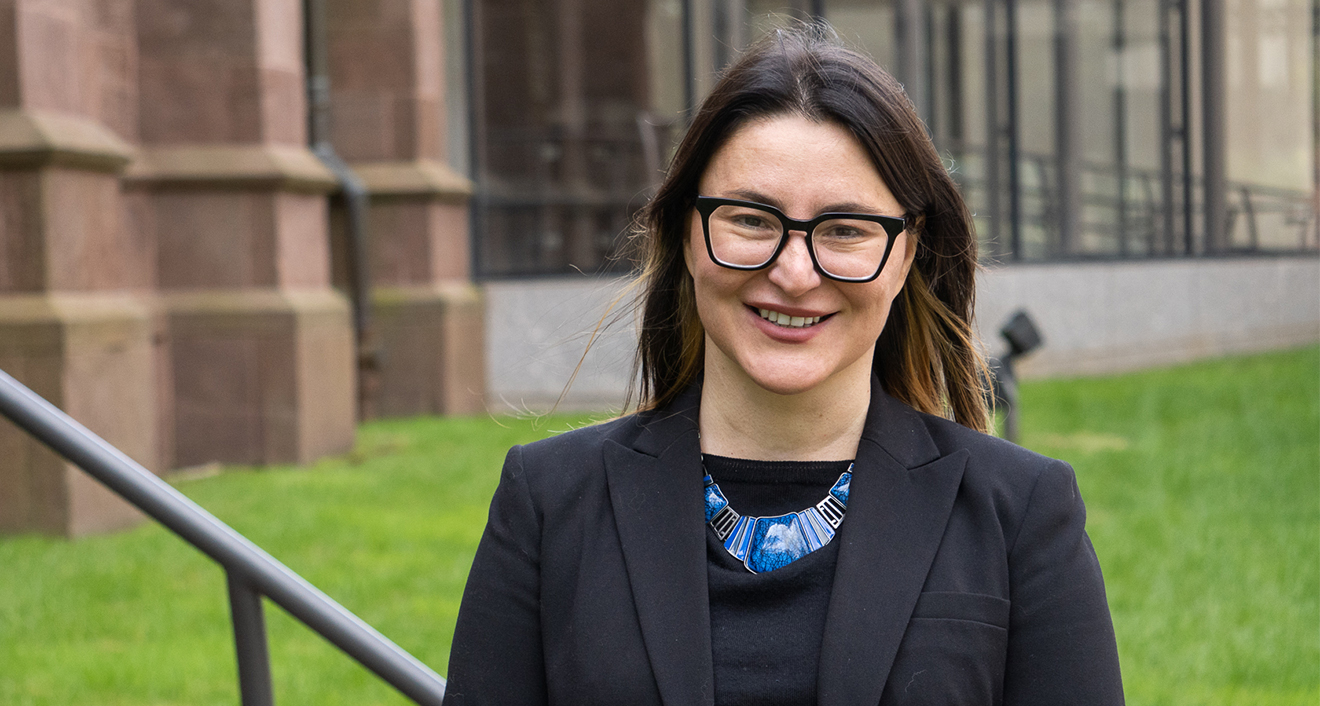
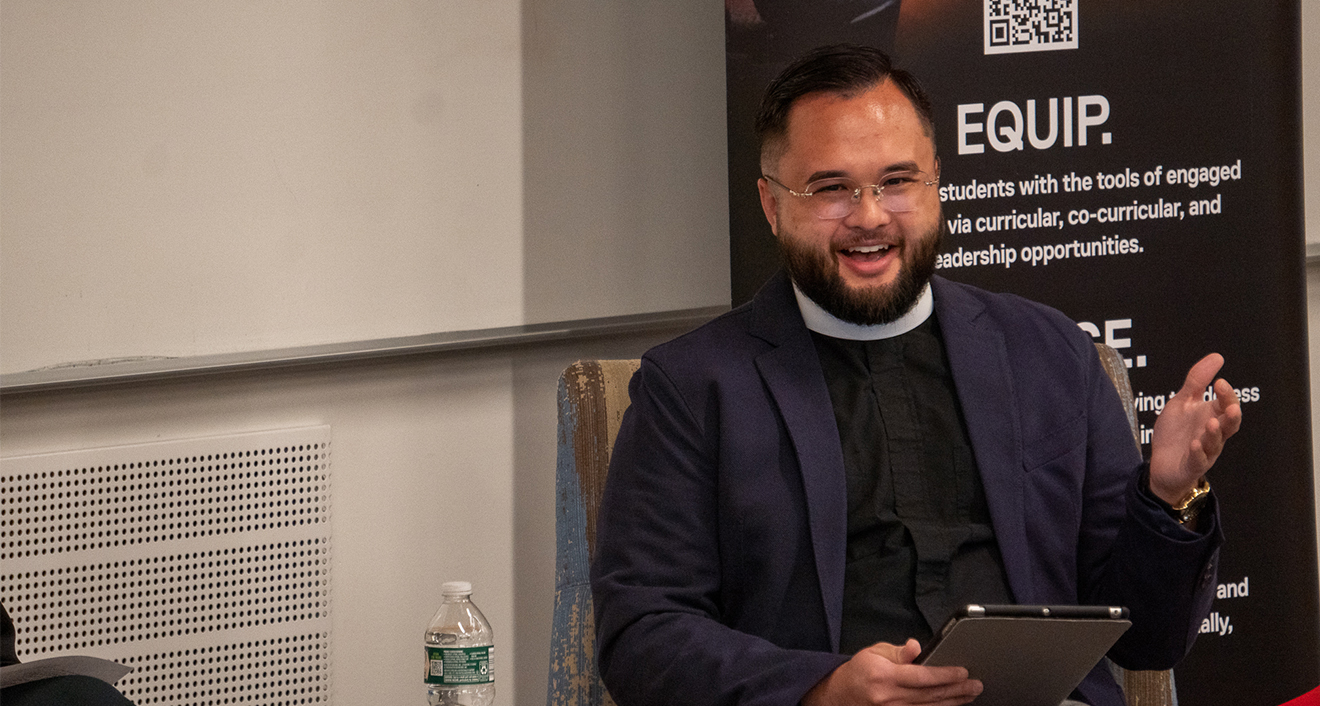
Panelists Adrian Weimer (left), professor of history at Providence College, Kelsey Hanson Woodruff (center), postdoctoral fellow in the Center for the Study of Guns and Society, Philippe Andal (right), visiting professor of public policy, during a conversation on the place of religion in democracy. (Photo by Mike Mavredakis)
Beginning the discussion, Weimer shared her expertise on early American history, constitutionalism, and the relationship between religion and democracy. She began by highlighting how New England colonists understood citizenship, wherein their intrinsic belief was tied to their responsibility to be actively involved in public life. Weimer explained how religious convictions during that time were ultimately linked to how citizens understood civic responsibilities, engaged with political issues, and acted in service of the common good.
“The people who have the virtue of public spiritedness are the people who actually, because of their religious convictions, understand that they have a religious duty to do their homework, to figure out what's going on, how that affects the common good,” Weimer said. “And then to pray about that, and not only pray, but take action.”
Weimer then connected this early understanding of civic responsibility to another tension in the formation of American political thought: the desire to separate the church and state while maintaining religious ideals of morality, justice, and the common good. “You want a very clear line between church and state, and that's part, so the church can hold the state accountable,” she said. “On the other hand, you want your very deep cultural sense of justice and fairness, and the very basis for the law, to come from ultimately a religious force.”
Building on this discussion, Woodruff, whose research focuses on the intersection of Christianity, politics, media, and gender, said that religious diversity has been an integral feature of American public life since its founding. During the country’s founding, colonists were largely concerned with competing forms of Protestantism. However, Woodruff noted how the United States has always been a place that has included people from differing religious backgrounds.
Woodruff also explored the question of whether religion can be completely separated from politics within a pluralistic democracy. “I'm skeptical of the complete ability to separate religion from public life, and I'm also not sure that that should be our goal,” she said. “Religion informs people’s values, or the lack of religion or other convictions informs people's values, and so they will bring them into politics.”
Woodruff argued for creating greater understanding between people of different faiths and beliefs, rather than completely divorcing the role of religion from public life. She highlighted the importance of religious literacy and said citizens should possess a baseline understanding of all the secularized institutions that characterize diverse American communities. “One way we can live alongside one another is increased religious literacy,” she said. “We don't learn a lot about the religions of the people sitting next to us in class or our neighbors.”
Andal, a senior pastor of Community Baptist Church in New Haven, explored the role churches play in a political society. He reflected on the institutions that shaped his own understanding of faith and democracy. Andal grew up in Nashville, where he was shaped by two major historically Black institutions founded in 1866—Mount Zion Baptist Church and Fisk University. He described how both institutions emerged in response to the pressures of Reconstruction, built to support the transition and participation of Black Americans in civic life. “They didn't wait to be welcomed into the republic, but they built rooms where they would be formed for it,” he said. “The church formed the soul, the school formed the mind, and together both institutions formed citizens who decided to form and make and control their own destiny.”
In relation to this history, Andal distinguished between two kinds of religion: the kind that strengthens democracy by preparing people for self-government, and the kind that seeks to exercise political control. “Religion sustains democracy when it forms people for self-government,” he said. “But religion endangers democracy when it seeks to govern people instead.”
The three panelists agreed that religion and pluralistic democracy have always existed in relation to each other. From the initial formation of civic values in early American democratic life, to contemporary debates over the role of religion in public spaces, they revealed how faith can both promote and challenge democratic participation and pluralism. Their main takeaway: The United States must maintain spaces for free religious expression while protecting the ability of individuals with diverse beliefs to participate equally in democratic life.