
Lt. Governor Hopeful McLaren ’08 Talks Politics and Perseverance
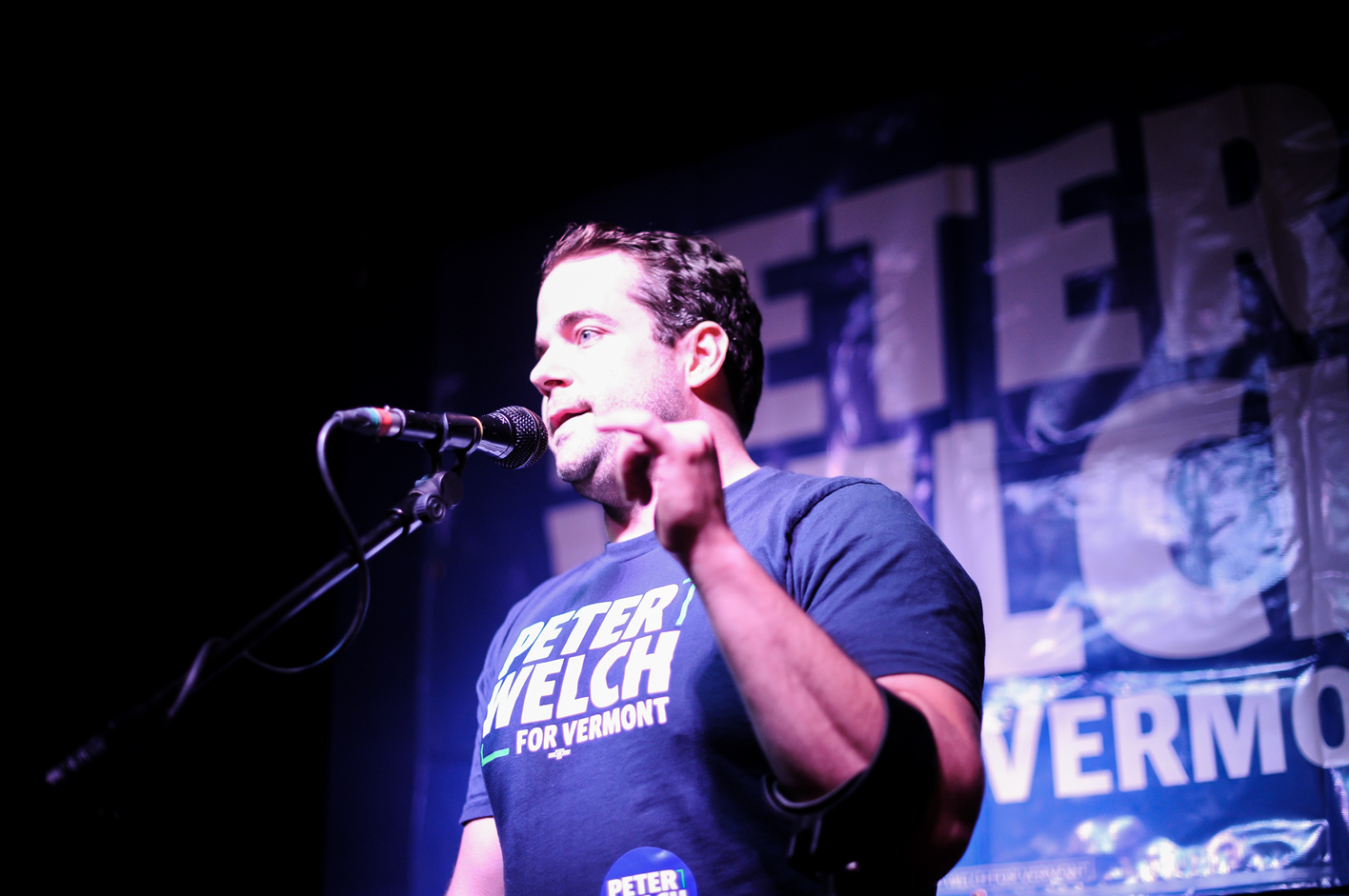
As Ryan McLaren ’08 campaigns for Vermont’s second-highest political office, he looks around and sees a place uniquely suited to sidestepping the partisan rancor we’ve grown to mistake for politics. “The [population of the] whole state is like the size of Nashville,” says McLaren. “That smallness keeps everything close and makes it a lot harder for toxic political conversations to seep in, and that smallness creates community.”
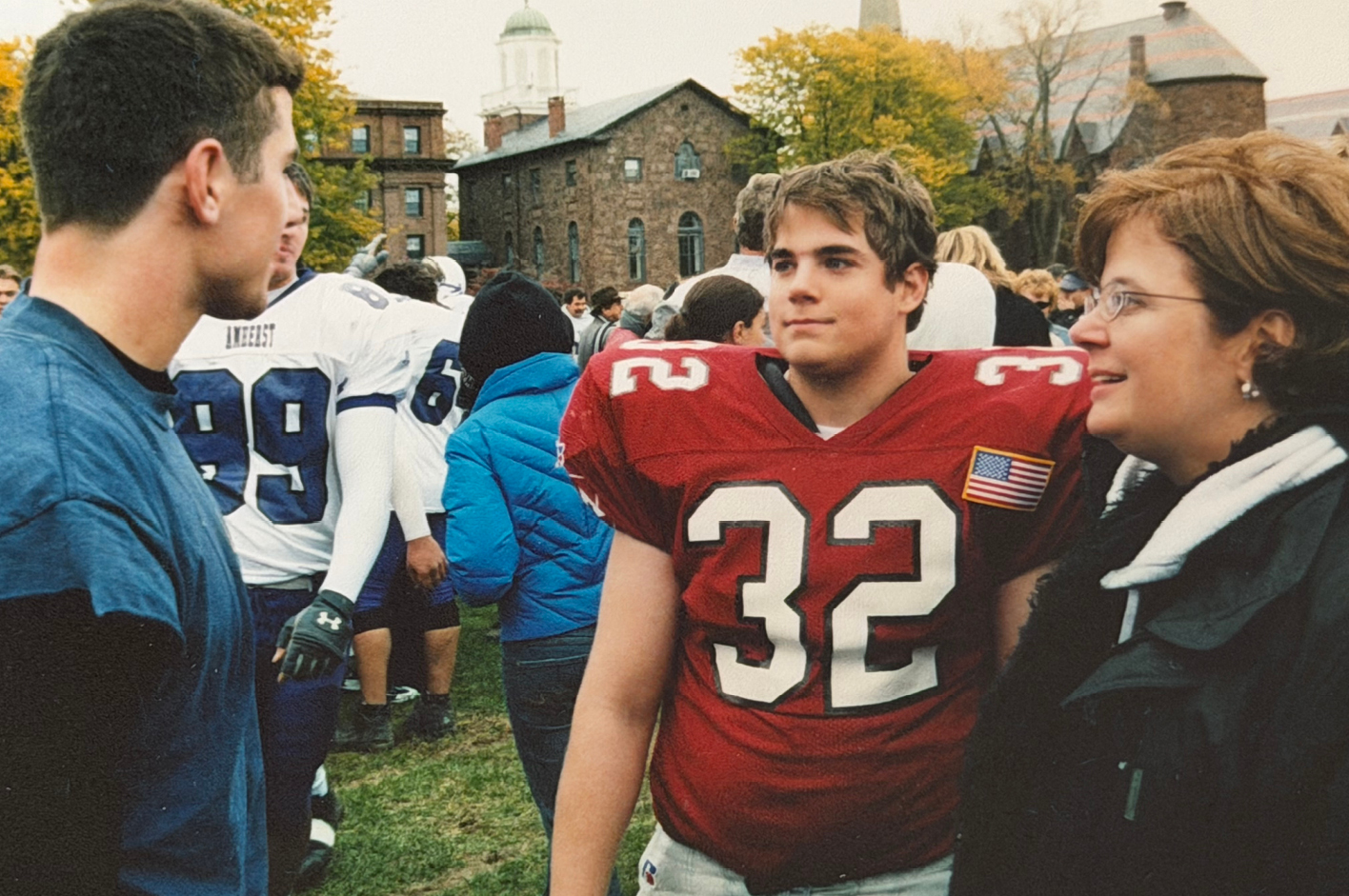
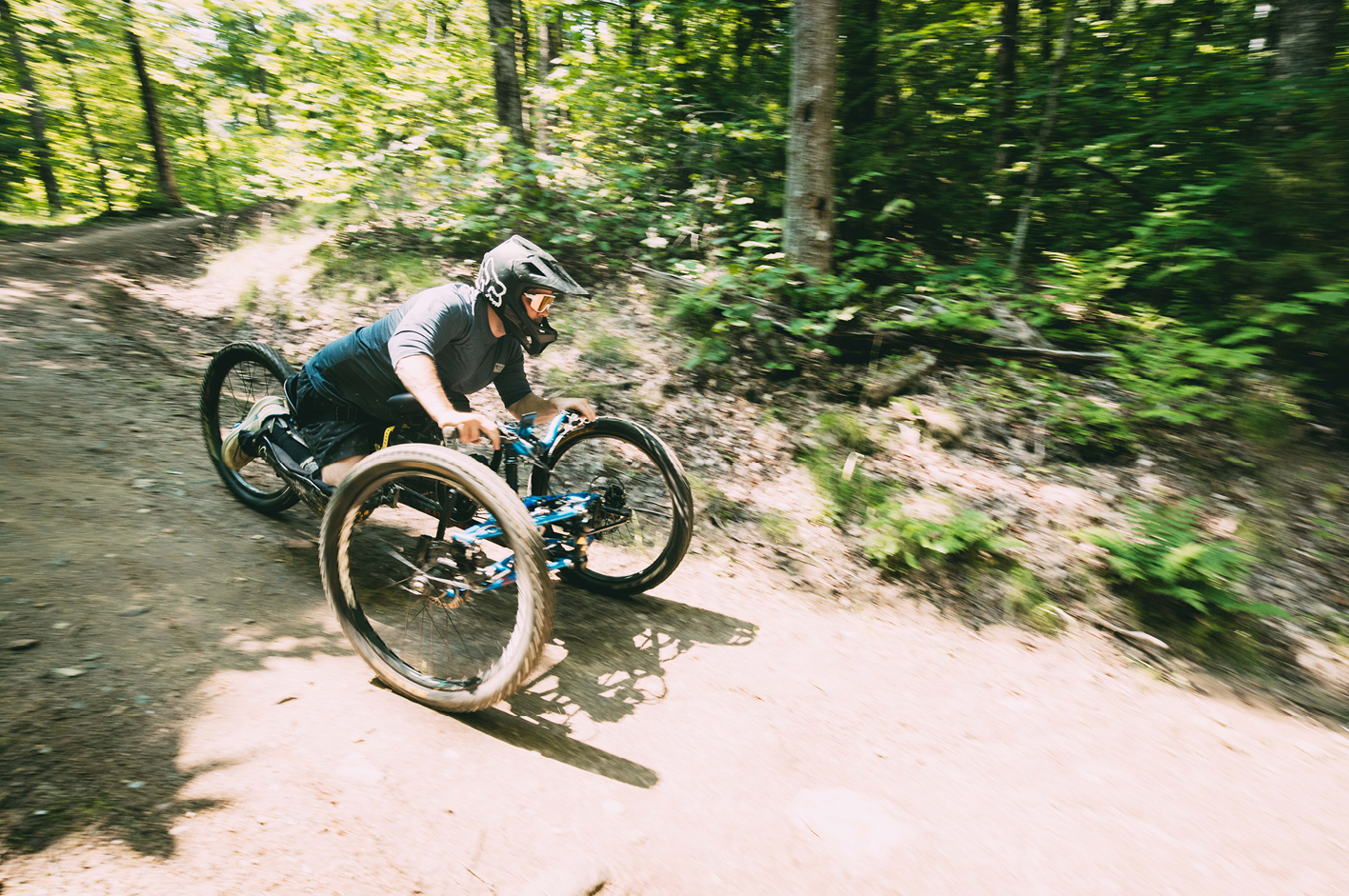
Born and raised in Essex Junction, Ryan was the second of the three McLaren siblings—after Jeff ’06 and before Ashley ’13—to spend their undergraduate years at Wesleyan, where he majored in American studies, played varsity football, and met his future wife, Adrienne Shea ’08. Upon returning to the Green Mountain State, he emulated the citizen servants he remembered from his childhood, serving on school boards and coaching youth lacrosse, field organizing for the state’s Democratic Party chapter and eventually spending a decade on the staff of Senator Peter Welch. And while a spinal cord injury suffered during a 2017 skiing accident threatened to interrupt his aspirations, McLaren’s recovery was a testament to resilience: among other things, he’s since competed four times as a hand cyclist at the Boston Marathon.
In January, McLaren announced his campaign for the Democratic nomination for lieutenant governor. With the August 11 primary on the horizon, McLaren spoke with Wesleyan University Magazine about finding his path into public service, rediscovering athletics after injury, and embracing pragmatism over ideology.
How did growing up in Vermont shape your sense of civic obligation?
My grandparents are from Barnet, a very rural part of the state, and my grandfather was a classic New England conservative. But when he was on the selectboard, he helped relocate this Buddhist retreat in Barnet: They just needed a home, and he didn't care that they were different in culture, or vibe, or whatever. Everyone helped each other and lent a hand. At the same time, my parents didn't go to college and they didn’t have much, but they were able to buy a house and send us to great public schools, and their commitment to giving us an opportunity that they didn't have for themselves was how I got to Wesleyan. Somehow, they were able to coach our little league teams, coach youth football, and volunteer their time in our community, even if they didn't always have the time. That’s just kind of what people do in Vermont.
You and your siblings all graduated from Wesleyan. What about the school spoke to you?
I felt at home, particularly around the football program—being a part of a team is still a big part of how I understand myself. Athletics opened the door for all of us, but it wasn’t just that. I remember showing up freshman year feeling like I was in a different universe and, honestly, having a hard time keeping up academically. I met Professor Claire Potter, who was my thesis advisor—someone totally different than me in a lot of ways, but she was so generous. [We first met in] a queer history class. I didn't have any sort of background or understanding of what the curriculum was going to be. But that shaped my own intellectual curiosity and personal beliefs around how all these seemingly isolated things—our politics, our culture, our government—are so intertwined. I probably asked some stupid questions, but Claire had the capacity, generosity, and grace to teach me. She invested in me. I was just some football player, but she made me feel like I belonged.
Athletics have clearly been important to you. What was it like to navigate the uncertainty after your accident in 2017, and how did you reclaim that part of your identity?
The second bone I ever broke was my L1 vertebrae. I broke my back and was paralyzed from the waist down, but I was lucky enough to retain some function below my level of injury. My first PT session, my physical therapist said, “You're going to put on these braces, and we're just going to try and stand up.” And we did. I was in a lot of pain, and I think I crushed her shoulder by squeezing so hard, but she pushed me to do it. Being an athlete was helpful in the recovery phase—it was like preseason training. It had this very familiar cadence to it. And honestly, the Wesleyan athletics [alumni] community was extremely generous to me after my injury—financially generous to help pay for my rehab, and emotionally supportive. Even though he was not my coach, Coach Dan DiCenzo saw me in the hospital and let me know that the Wesleyan community was behind me. That meant a lot.
It became a lot harder when I left inpatient rehab. I lost connection with using my body to do something physical that was so core to being an athlete, and it took me a while to find it again. Some of the foundations I've worked with, like the High Fives Foundation, were really essential in making sure I didn't lose that. How I work out now looks different; I can't do all the same things. But in trying new things, whether it's mono skiing or hand cycling, I quickly came to learn the feeling that was so essential about athletics—the sense of freedom, that mental state you reach when you're doing something hard—is still accessible. It feels exactly the same. It just looks different from the outside.
There’s a longstanding crisis of civic engagement, particularly at the local and state levels. What initially drew you toward public service, and what satisfaction did you derive from getting involved?
My first public service role was on a school board. I felt lucky to have had the experience I had going through public schools, and I felt a real obligation to make sure that opportunity was available for as many kids as possible, that they were getting what they deserved out of an educational system that helped give me so much. What’s great about a school board is that most of the decisions you're making are extremely practical. You don't have time for bigger, more ideological conversations: You're trying to pass a budget that your neighbors can support and use finite resources to provide kids with the best education possible for them. What that looks like from community to community varies a bit, but it's about your values and how best to express those in a budget. It gave me skills to continue this path of public service in a way that is outcome oriented.
You launched your campaign for lieutenant governor in January. Where do you think you could make the greatest impact in that position?
This position is an opportunity to make a difference in first-order problems that are impacting Vermonters. Vermont's the third-most-expensive state in the country to raise a kid. We're having real challenges in access to health care and education. We’re seeing years of economic decline that sucks money, attention, and energy out of rural communities. A kid growing up today in Vermont will not have the opportunities that I had, and that's changed just in the last 20 years. That's a tragedy, it needs to change, and that's my reason to get out of bed every day.
A lot of stuff doesn't lie on ideological lines. If you need to figure out how to feed your kids, or milk your cows, or whatever it is, no one's asking who you voted for. It's like: Where are you and how can we help? There's very little black and white in the world, but there's a lot of subjective human experience that really matters. Real openness and generosity are possible in our politics, as hard as it is to see, and they’re especially possible in a place like Vermont. My opponent in this race is nihilism, the sense that nothing matters, politics is broken, and even if you work hard, you're not going to get ahead. I just don't believe that. My life experience has taught me something else: If you get up every day and you try to do a little bit better, things you never could imagine are possible. The only way to fail is to stop trying, and there’s hope in the trying.