[an error occurred while processing this directive] [an error occurred while processing this directive] [an error occurred while processing this directive] [an error occurred while processing this directive] [an error occurred while processing this directive]

A Very CoDES Winter Greeting

With Fall semester classes coming to a close and temperatures dipping below freezing, Wesleyan’s annual holiday greeting ushers in the end of the year with warm wishes and good cheer. This year’s greeting offered a whimsical take on iconic Fayerweather and the boundless imagination of our students. But instead of fairy godmothers, magical elves, or benevolent spirits working while the campus slept, a team of students, College of Design and Engineering Studies (CoDES) staff, and University Communications captured the magic of the season as only Wesleyan could—with some campus inspiration, CoDES ingenuity, and a ton of makerspace fun. Read on for a behind-the-scenes look at the making of the 2025 Wesleyan holiday video.

Video: Holiday greetings from Wesleyan University
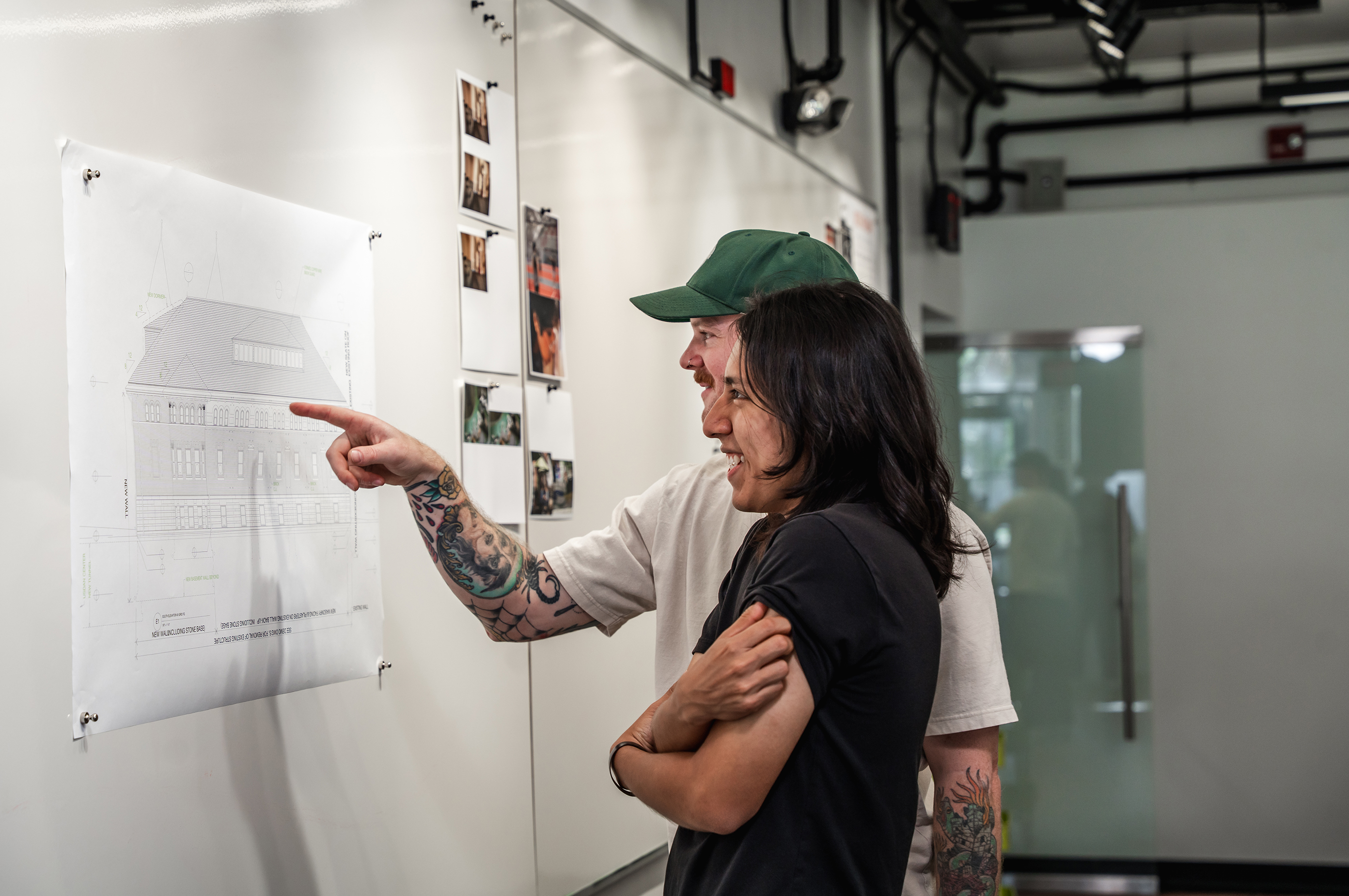
will at the board
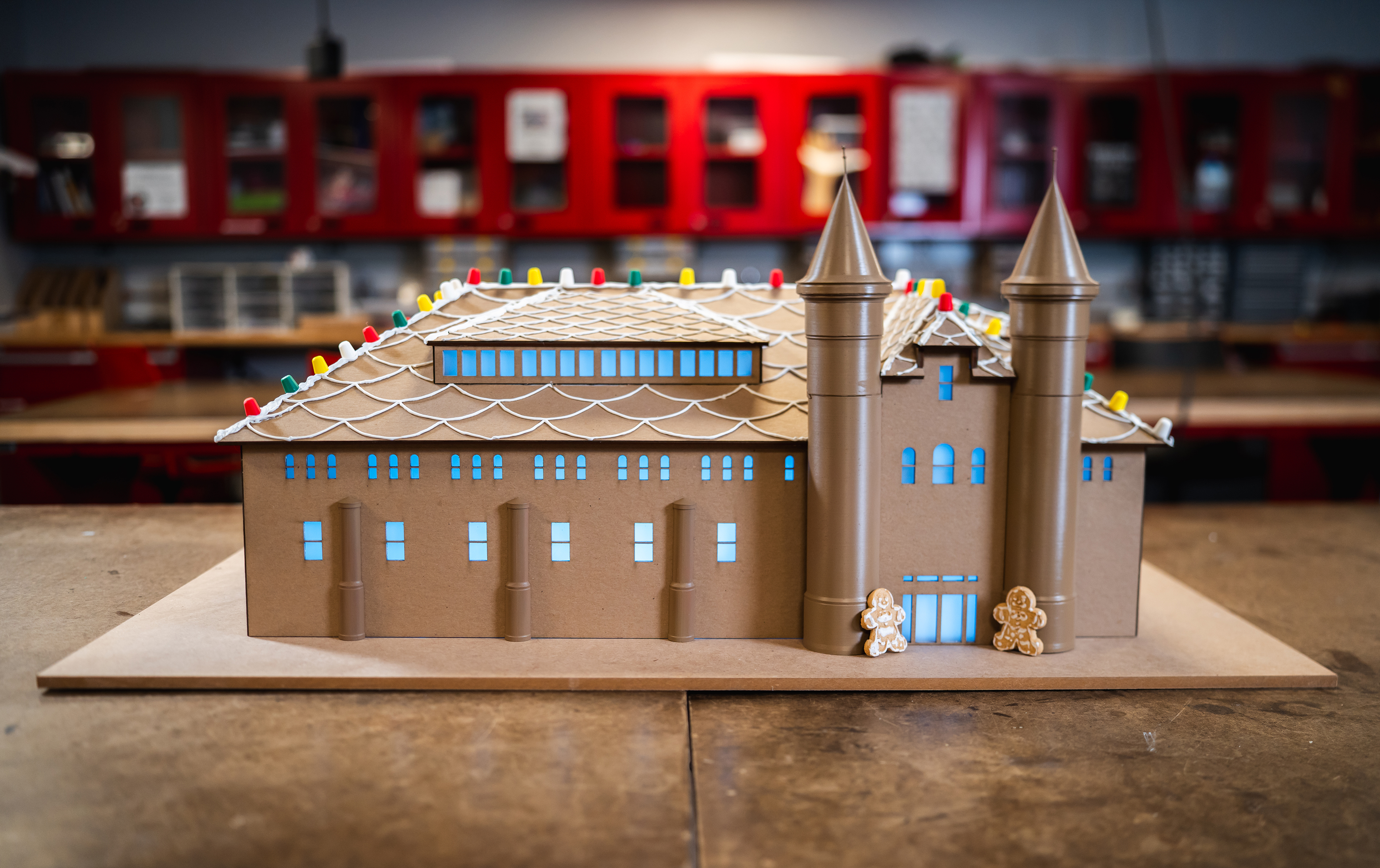
The drawing board. When University Communications first approached CoDES Director Elijah Huge about creating a digitally fabricated Fayerweather gingerbread house for the video, he was quick to get on board. Not content to just do a rough interpretation, the CoDES team brainstormed an idea for a model that employed precision and accuracy enhanced by creative interpretation and artistic flourish. Step one involved obtaining the original architectural plans for Fayerweather, collecting current visual references, and creating an exact 1:48 scale model of the iconic structure—precise down to its signature towers and windowed dormer.
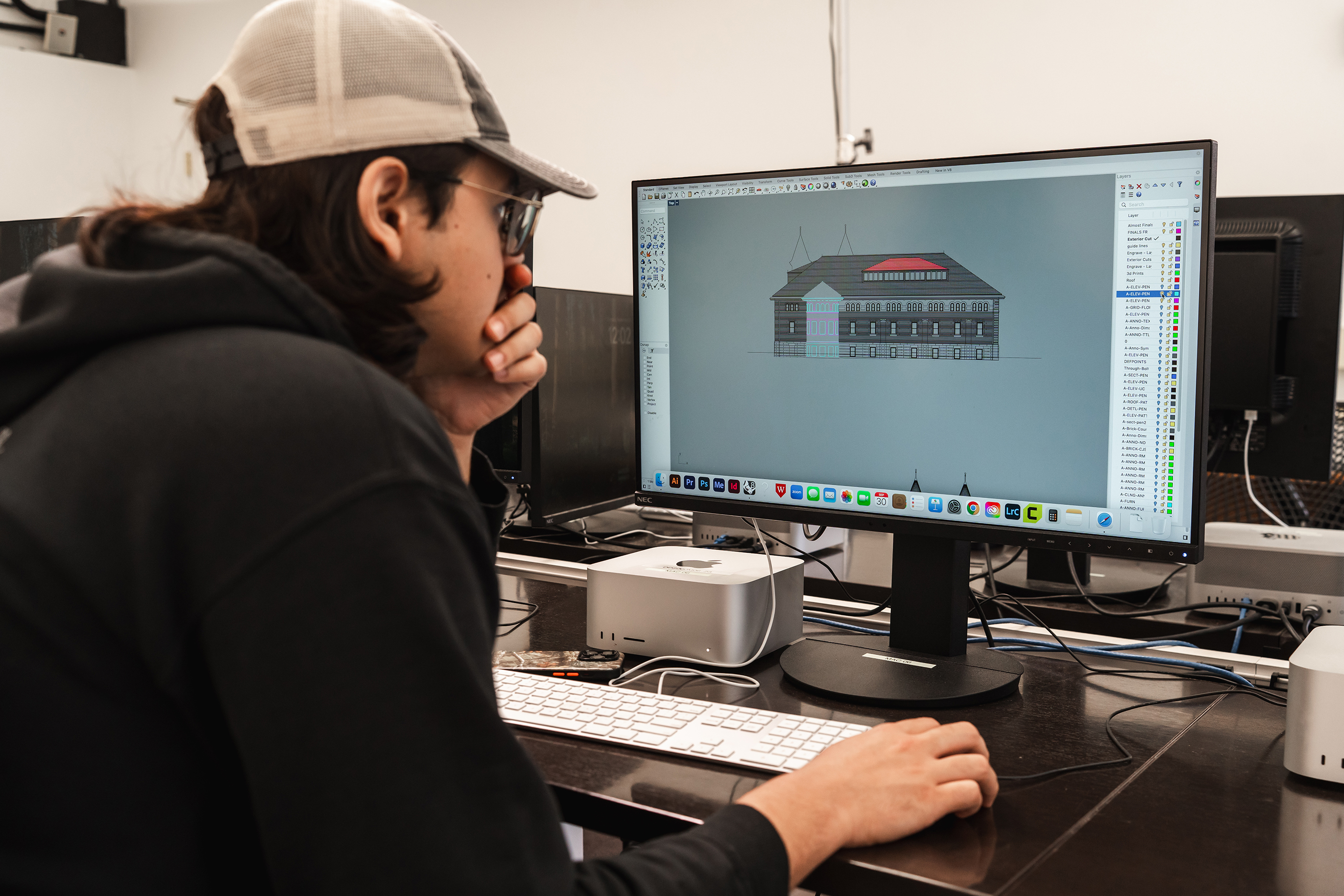
Billy at the computer
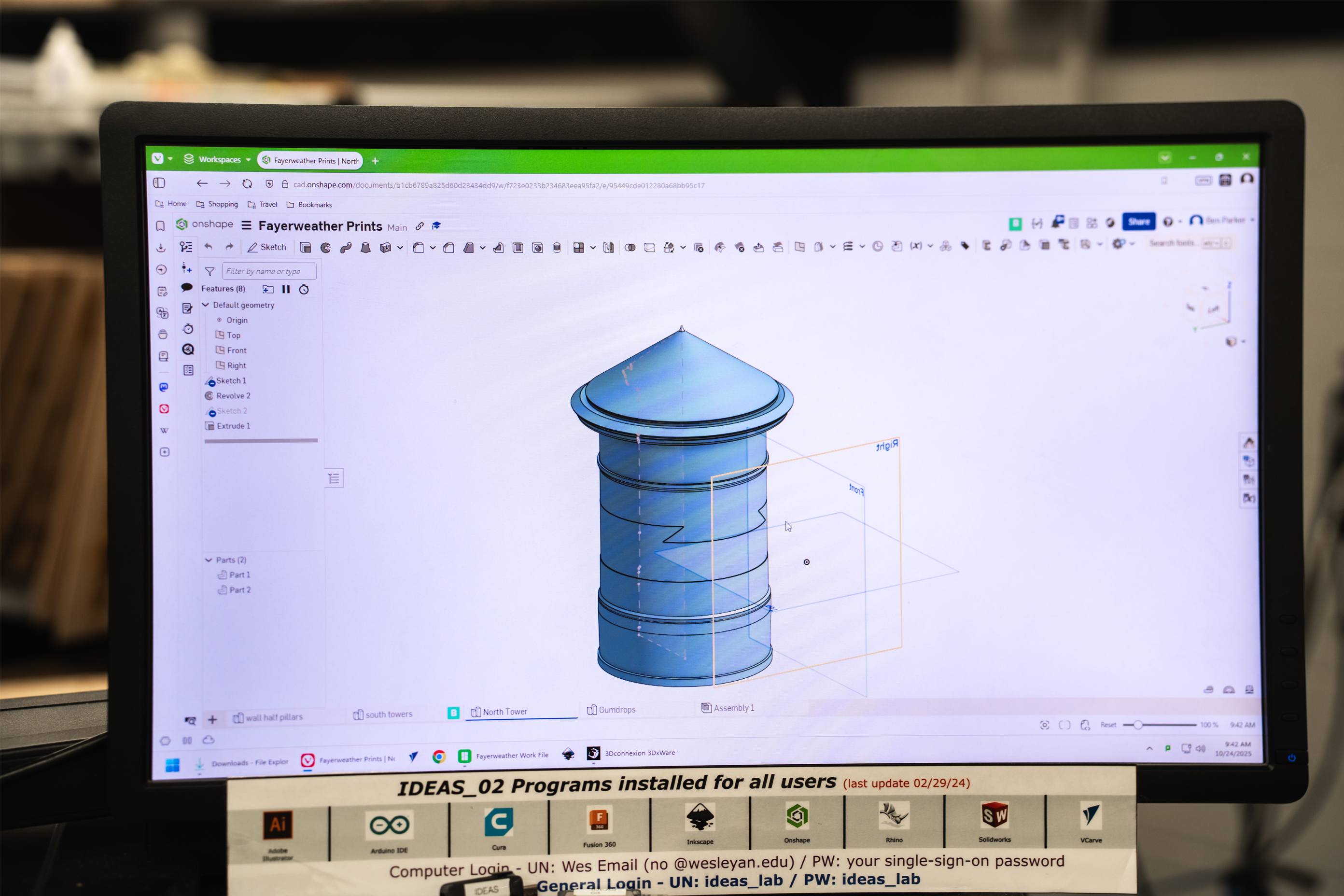
Translating reality into art. In order to get the plans in a format that could be scaled down and iterated, project lead and Digital Design Studio Coordinator and Technician Will Richmond ’18 worked with Architecture TAs Billy Kim ’27 (shown here) and Leela Lotfi ’27 to convert the original architectural AutoCAD files to Rhino and Illustrator. Replicating elevations, pitch of the roof, and other detailed calculations were all part of the planning.
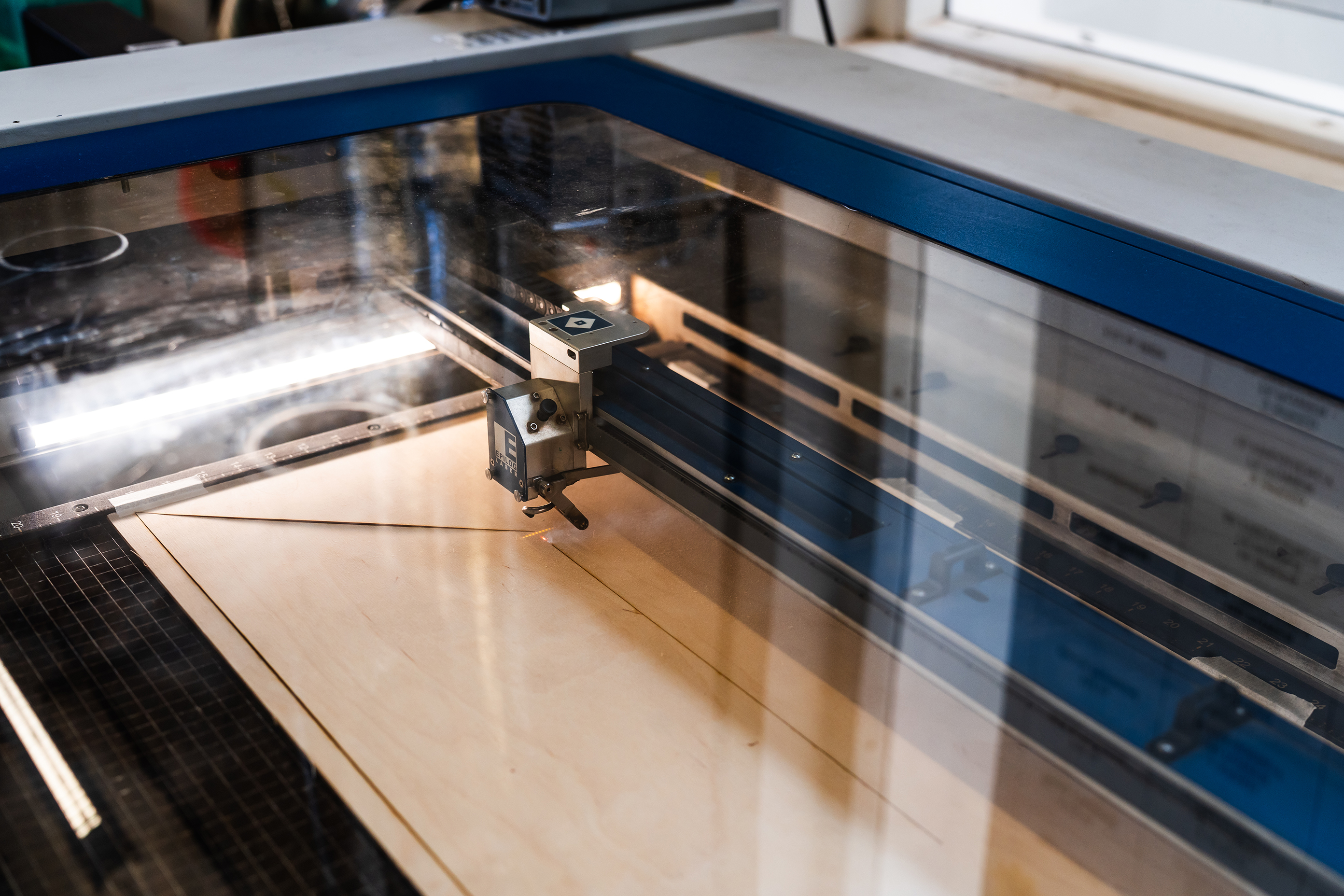
laser cutter cutting wood
The first cuts. Though the final model would be rendered in MDF and book board, early iterations and prototyping were done using 1/8” plywood. “MDF essentially acts the same as plywood,” Richmond explained, “but where plywood wants to bow and twist and bend, MDF is very stable and stays flat. It doesn’t bend or warp or twist over time.” To cut the various components of the structure, Richmond used the Epilog Fusion M2 laser cutter in the Digital Design Studio (DDS), which had a 40" x 28” print bed to accommodate the bigger roof and wall pieces.
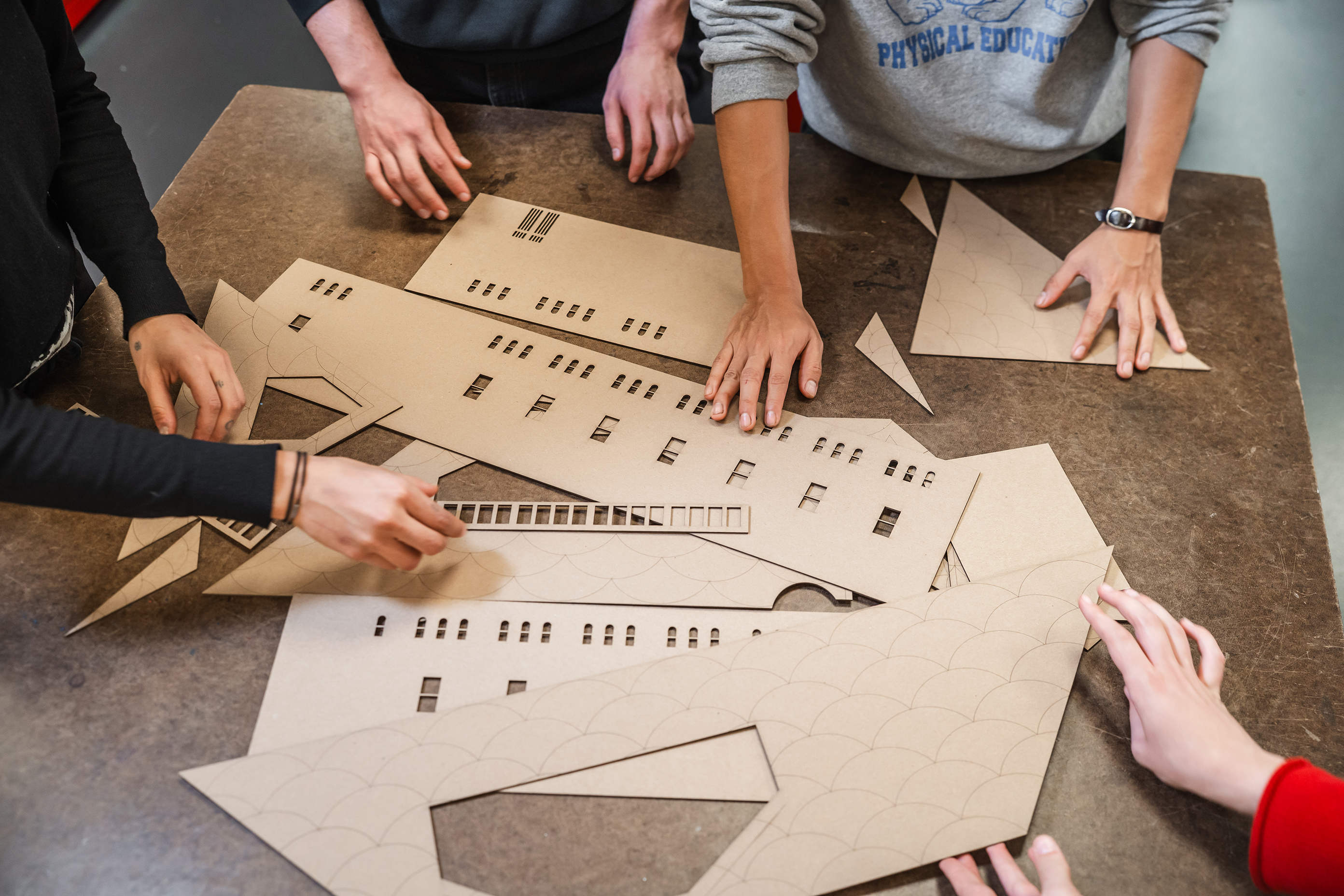
hands sorting through cutouts
Prototypes and pivots. Iteration and prototyping revealed inherent issues with scaling down a full-size architectural structure to a much smaller model. In some of the fine details (such as fittings and supports), adjusting for the differences in scale and material required some artistic license and a good bit of testing. Window spacing was tweaked to prevent breakage. Wall and roof measurements were modified to allow joints to sit flush when allowing for the 1/8” thickness of the MDF. “In a digital model, you’re working in two-dimensional planes, but you have a three-dimensional piece of material, so you have to account for that,” explained Richmond. “It was a lot of building a model, hot-gluing it together, and then taking measurements off of the actual model and adjusting the Illustrator file.” In total, the team built three prototypes before getting the measurements to their final satisfaction.
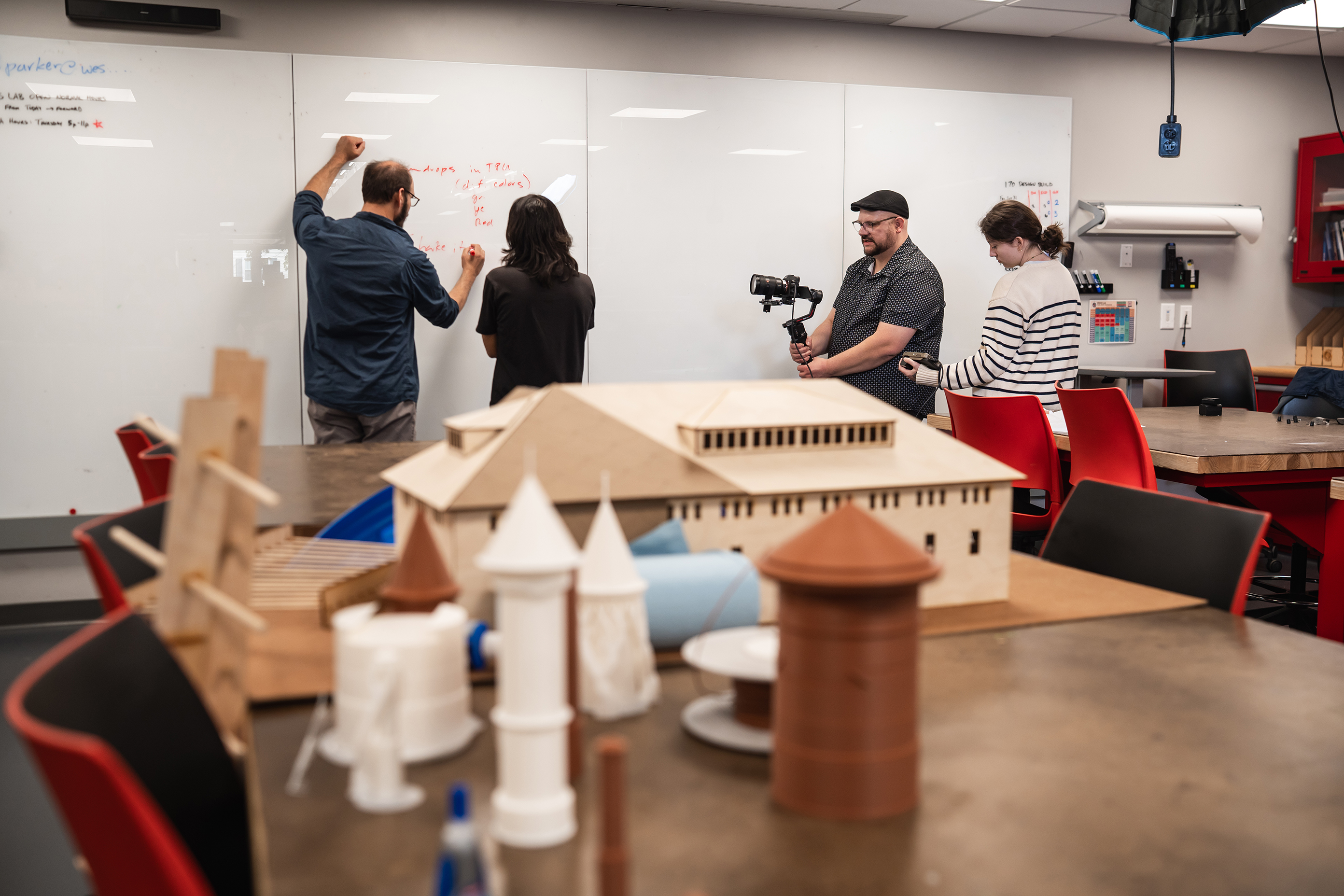
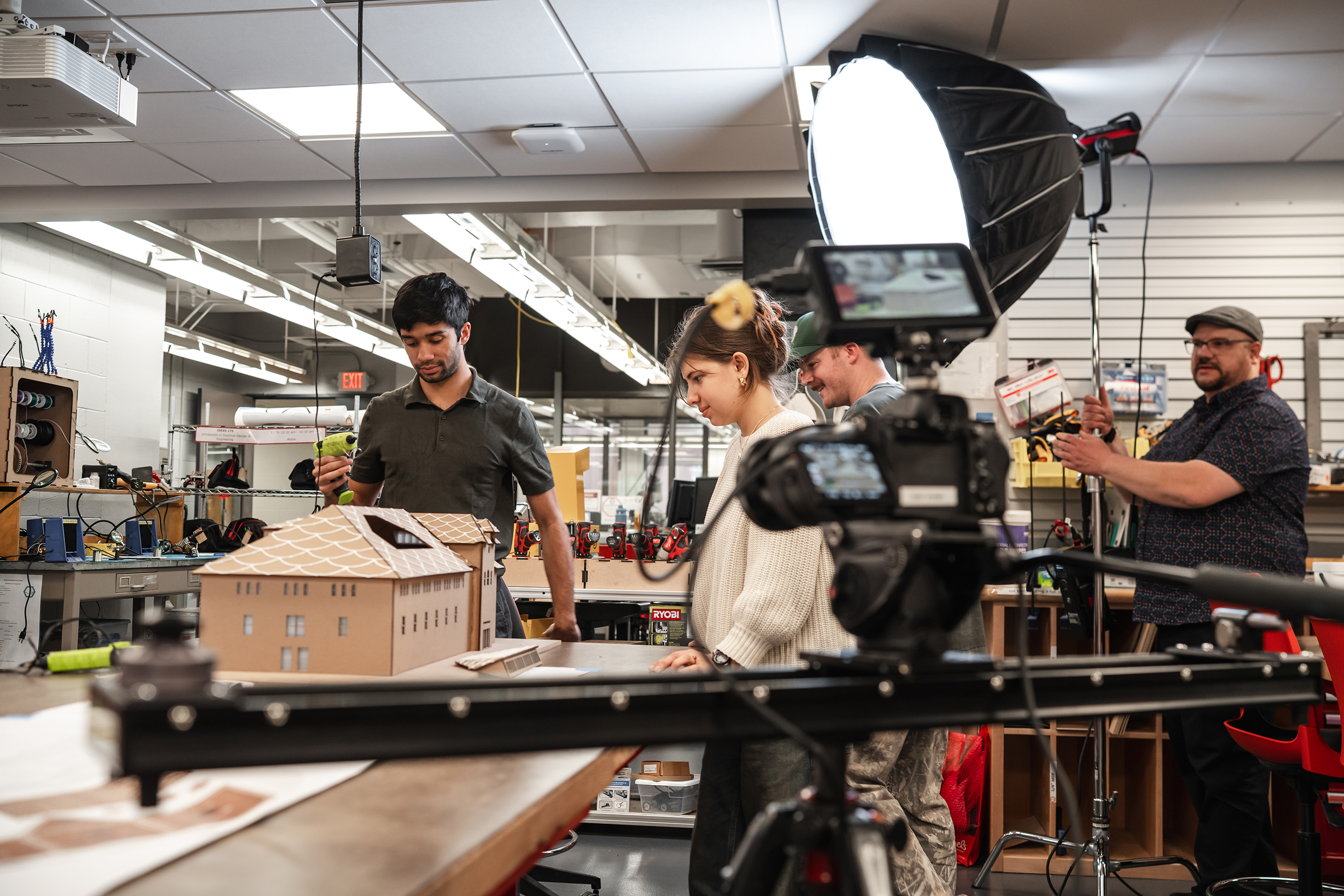
Ben at the board
The handoff. After Richmond and team had worked out the final dimensions and cuts for the main structure, the final prototype was shared with Makerspace Coordinator Ben Parker to start fitting the 3D-printed elements. Here, the third and final prototype can be seen among various 3D-printed tower tests while the UComms videographers film a segment with Parker and lead actor David Velasco ’28 in the IDEAS Lab.
tower rendering
3D fabrication. To create the rounder shapes (the two south towers, one north tower, five buttresses, and the gumdrops finishing off the “gingerbread house” effect), the team turned to Parker and the 3D printers in the IDEAS Lab. Mapping out the 3D printing plan in Onshape and Bambu Studio allowed Parker to get ahead of potential problems and formulate a plan for efficient printing of the various elements. Realizing that the towers were too tall for the IDEAS Lab’s larger H2D printers, Parker split each into a half-tower print and then designed a dovetail joint at the end of each so they’d fit together securely and stay stable in the final assembly.
3d printing
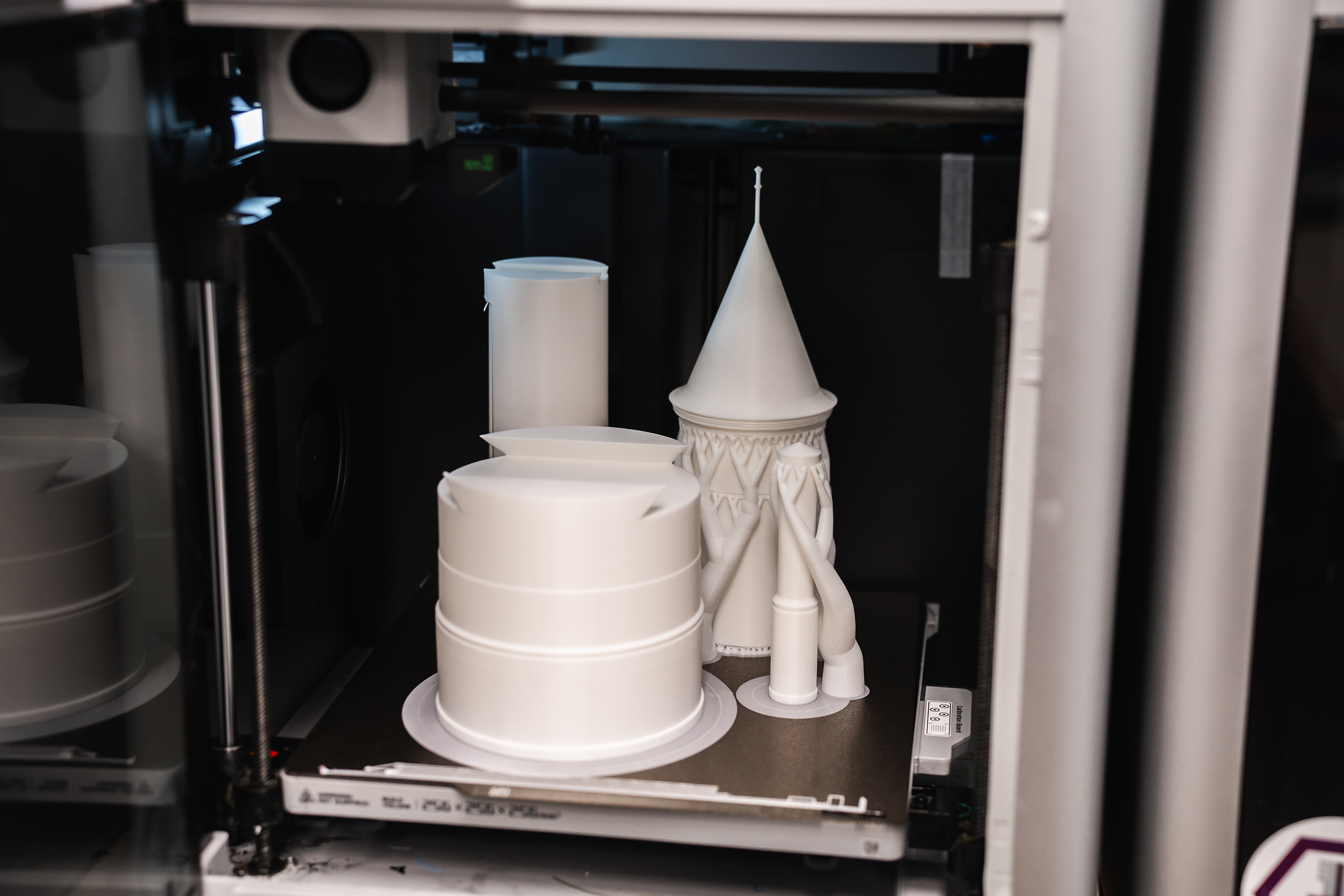
The towers take shape. Multiple pieces could be printed at once; here, both halves of one of the south towers and half of the larger north tower are being printed using the same bed. A dovetail joint in the joining faces of each tower half enables them to easily slide together to create a single stable unit. The added “tree supports” hold up the floating cantilevers (i.e., overhanging parts) of the south towers so that they don’t sag or break during the printing process. Once cooled, the extra supports are easily snapped off.
gum drops
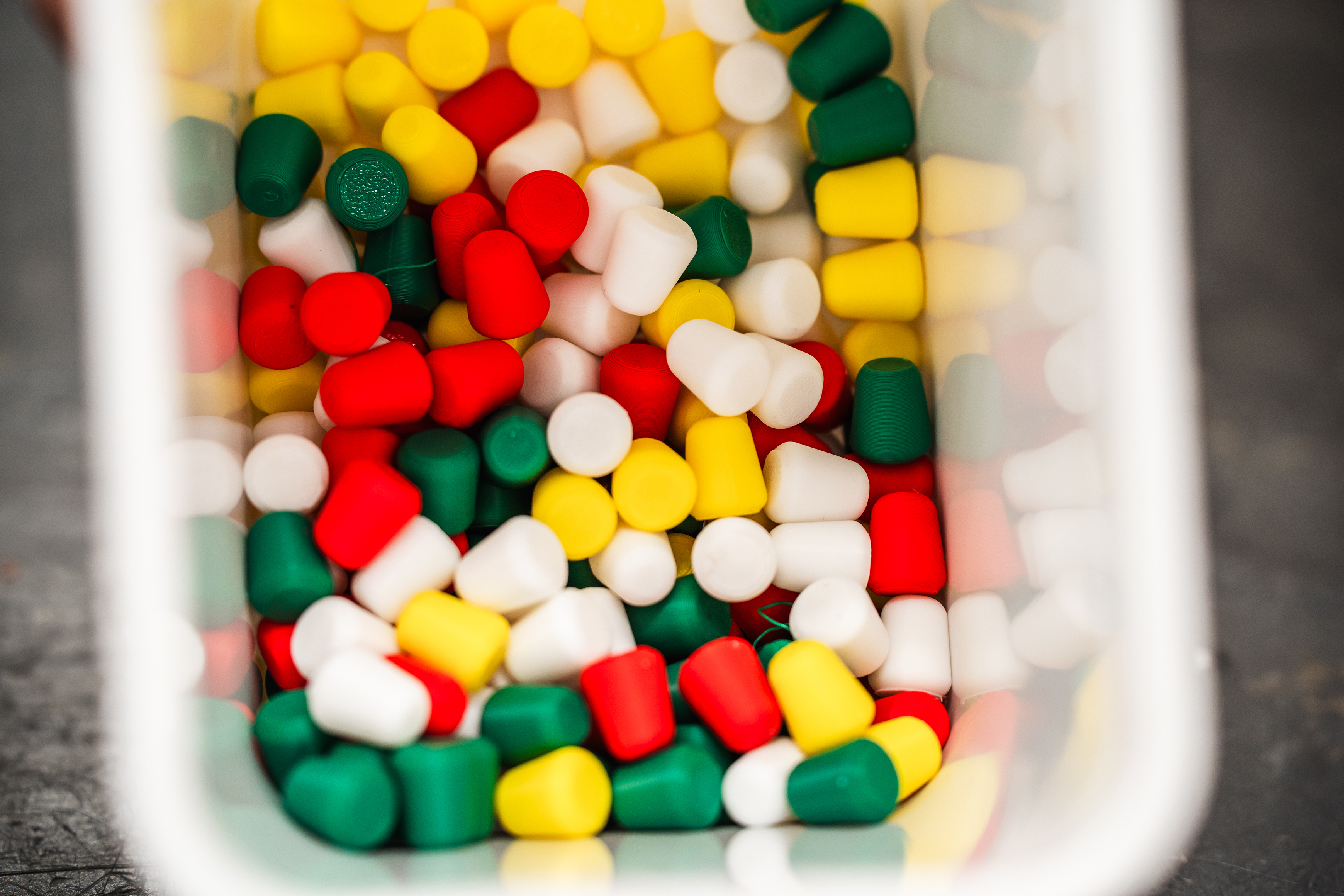
Good enough to eat? The “gumdrops” were originally built using TPU (thermoplastic polyurethane), which offered a more pliable texture that matched the squishy texture of a gumdrop. But after testing, Parker elected to go with the harder PLA (polylactic acid)—also used for the towers and buttresses—in seasonal hues to fit the theme and bring a bit of color to the build. All of the gumdrops were printed at once to minimize waste.
will at final assembly
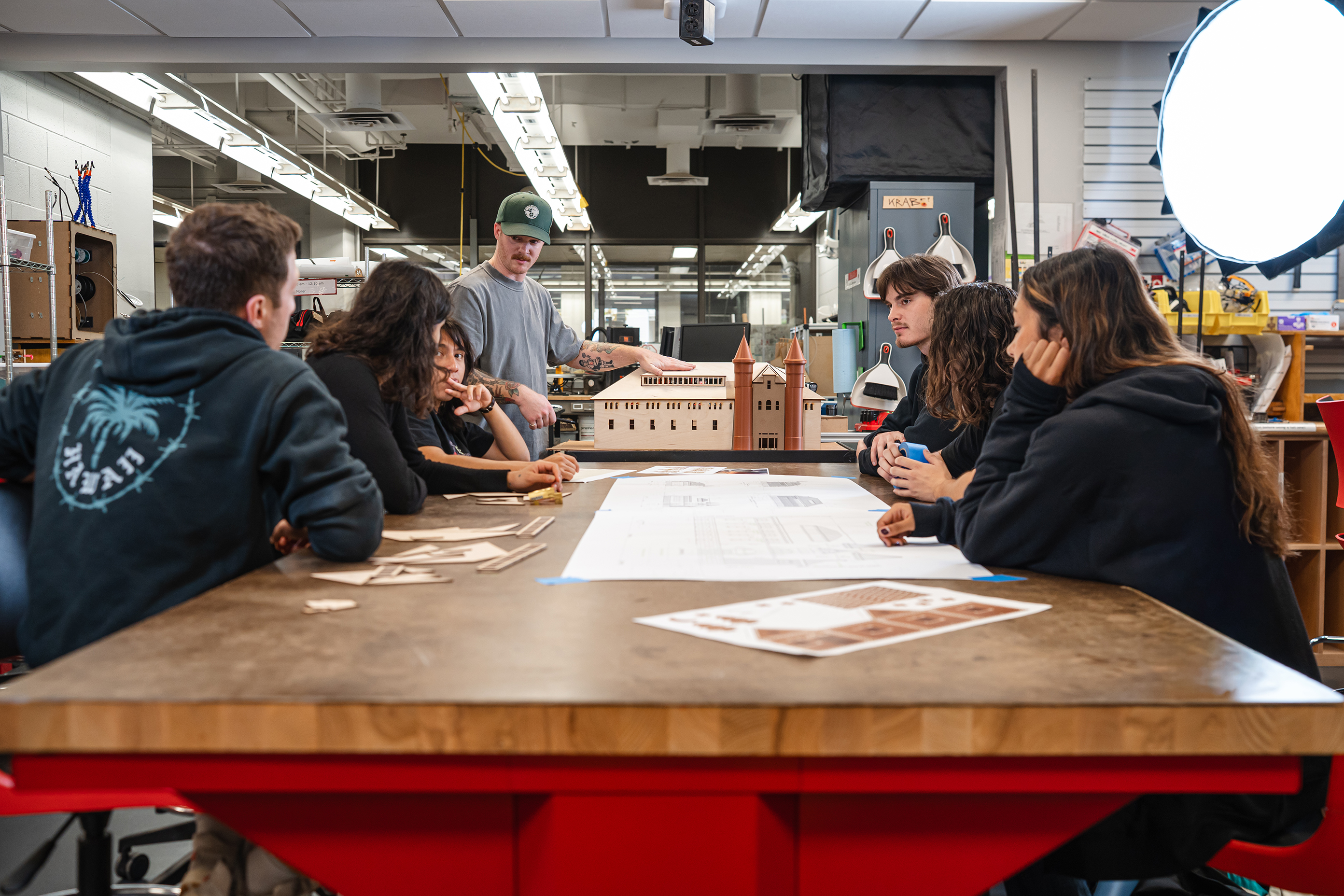
Final assembly. After all the pieces had been designed, fabricated, and tested, it was time for the final build, as captured in the video. Student builders assembled in the IDEAS lab, and with Richmond guiding them and the final prototype for reference, it was ”Action!” time.
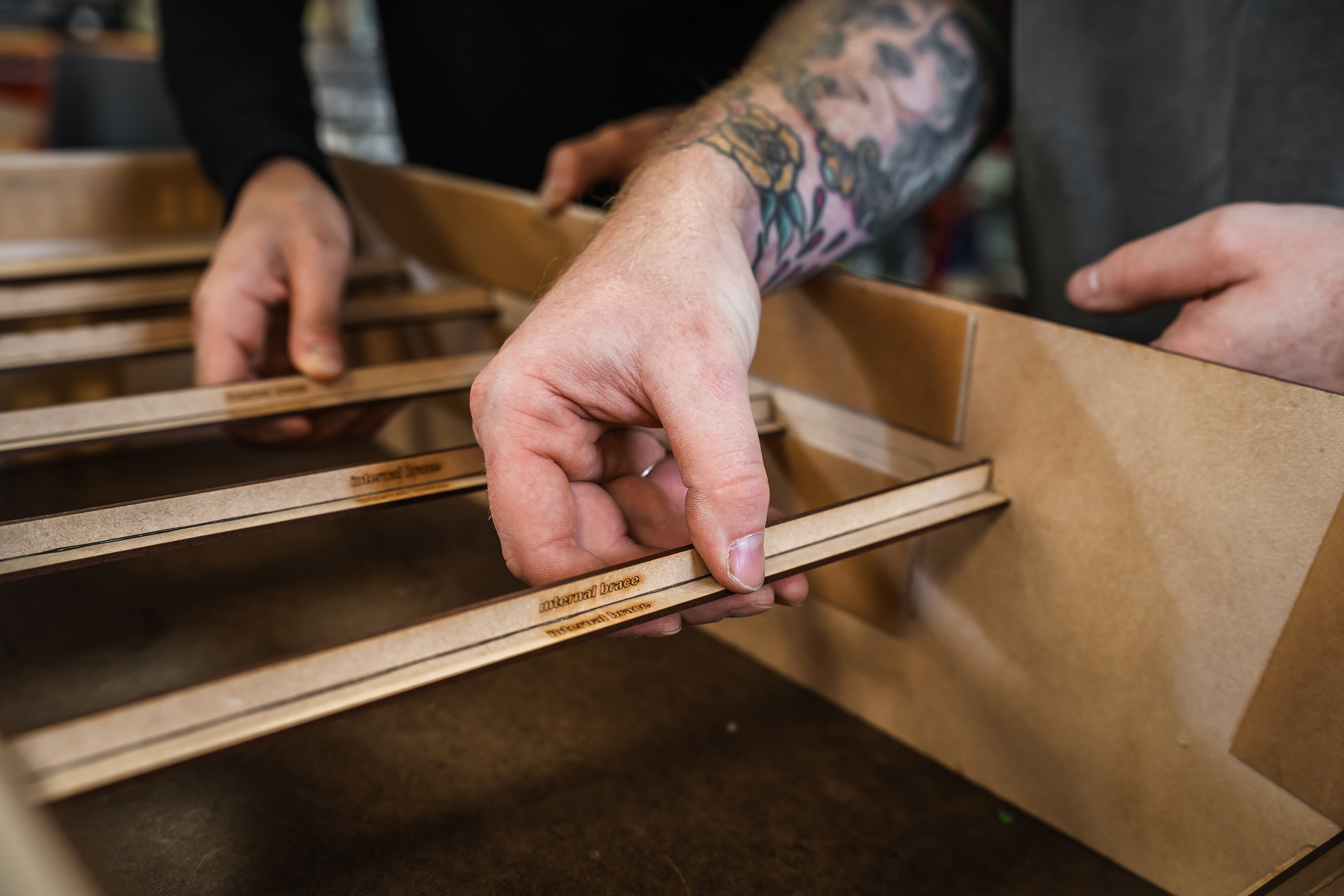
braces
Bracing for perfection. Extra braces added to the interior prevent the walls from warping, twisting, and racking once assembled.
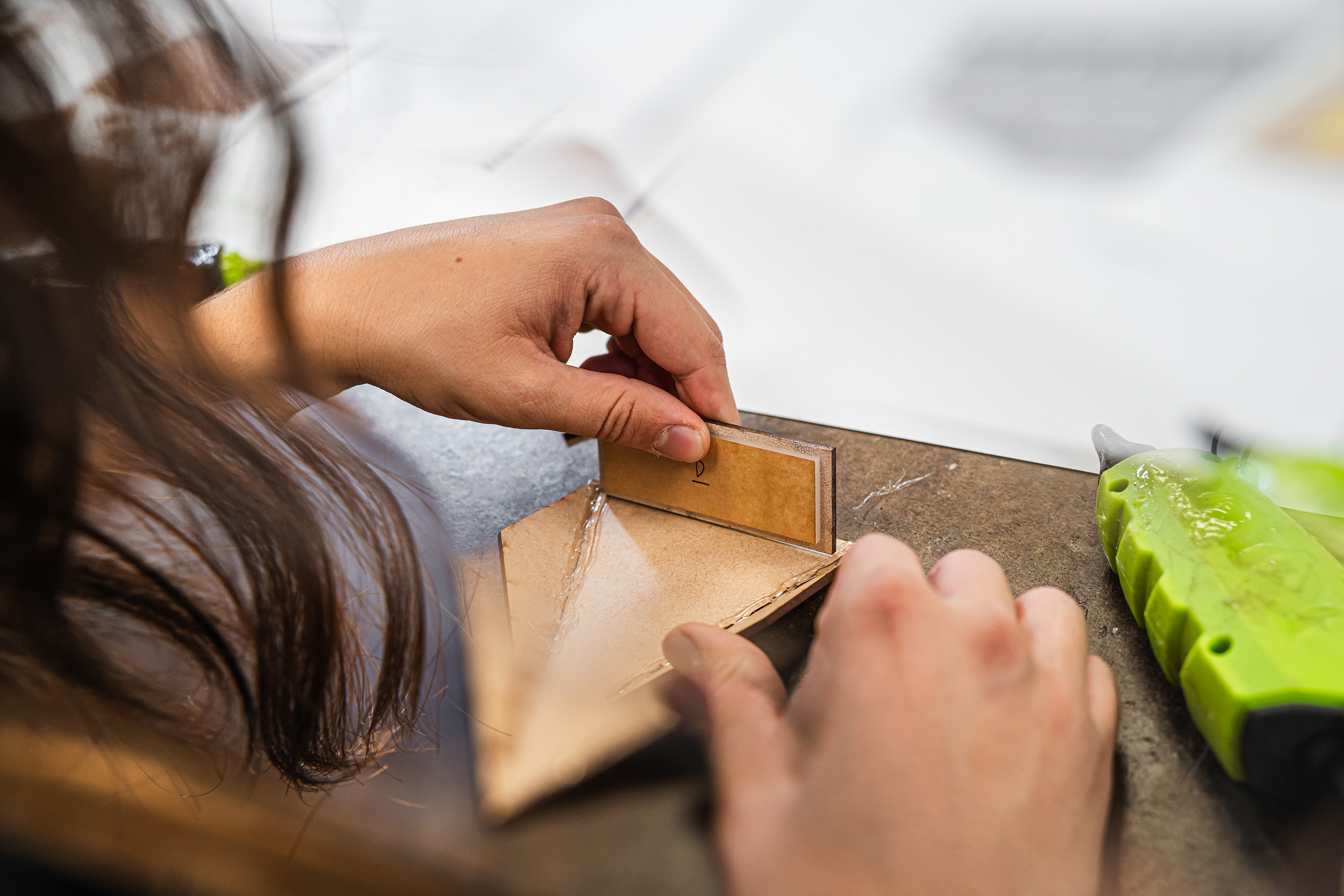
matching numbers
Precision and play. Every detail of the project was taken into consideration—including proper assembly. Each piece of the model was uniquely numbered and coded to prevent any last-minute construction errors.
filming final
Bringing the magic to life. For Huge, getting involved in the gingerbread project was a great example of collaboration driving creation. “CoDES turns three in the Spring—old enough to get serious about gingerbread building!” he said. ”Working with UComms on this project was like peeking through a window onto the ongoing hum of learning, exploration, and discovery happening in the IDEAS Lab and Digital Design Studio.”
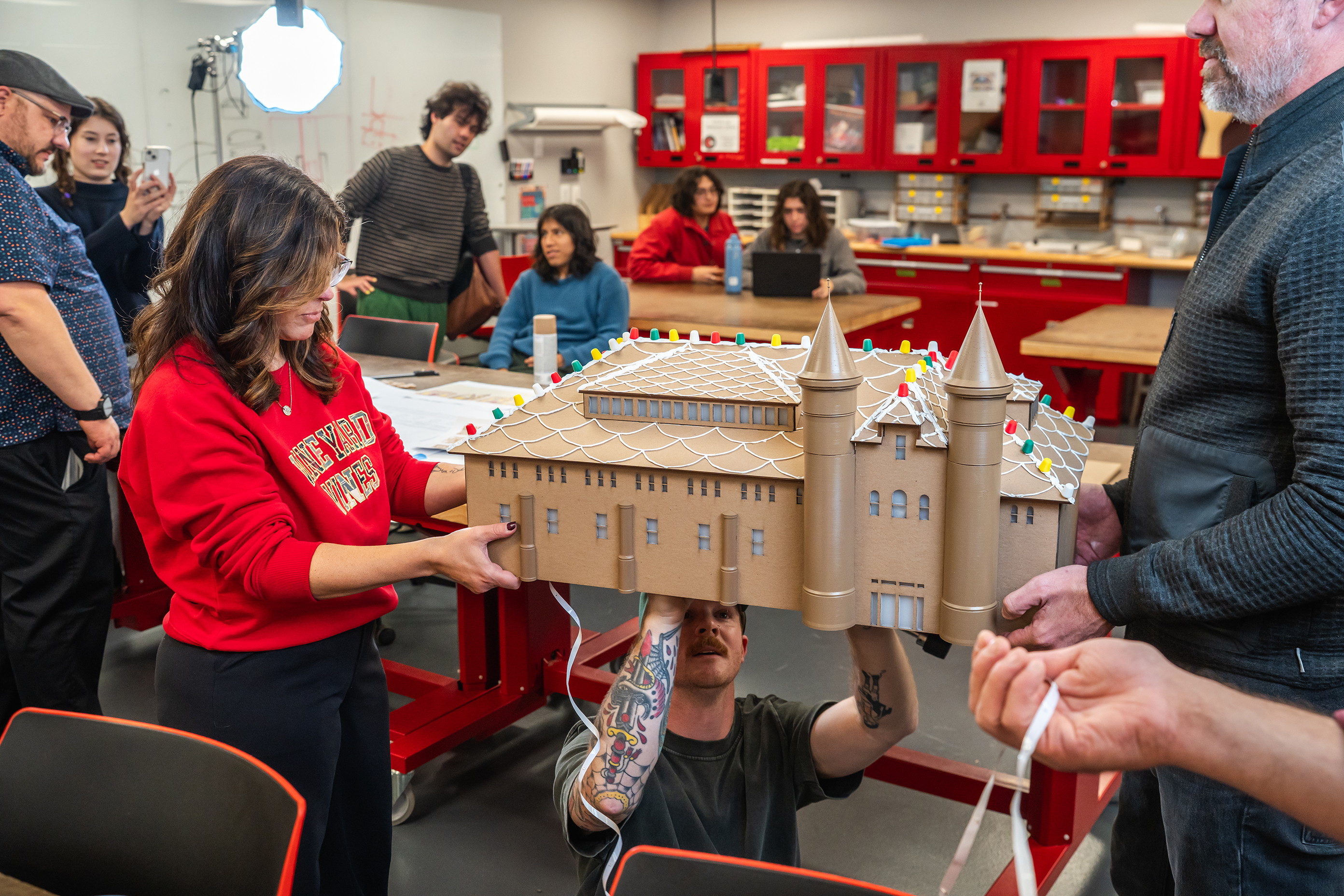
installing lights
Finishing touches: After the MDF pieces were fully assembled and glued, a final “skin” of book board was added to the exterior to better approximate the color and look of gingerbread. Silicone caulk “icing” shingles provided more authentic gingerbread charm, and frosted acrylic gave the windows more of a winter feel. A quick coat of spray paint to blend the laser-printed towers and buttresses with the book board, and one last addition of LED lights radiates the lived-in warmth of the real Fayerweather.
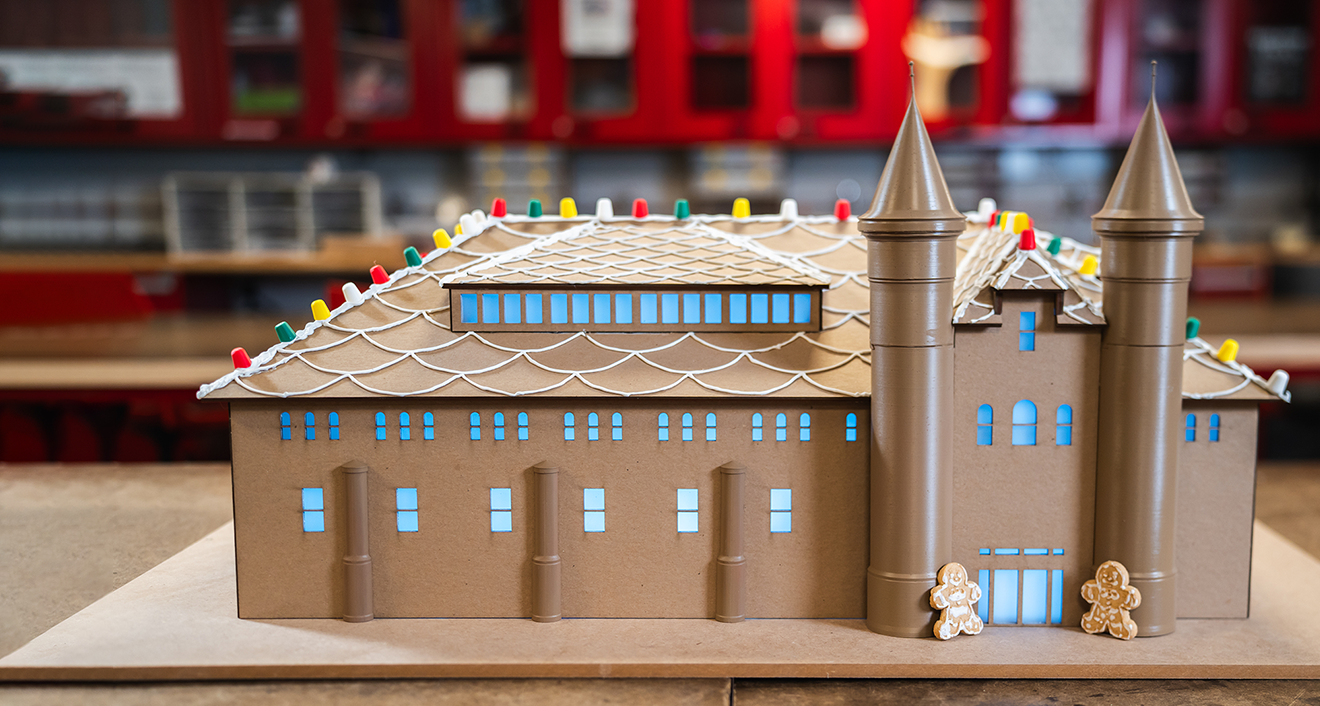
finished model
Fayerweather never looked so sweet! The final “gingerbread” Fayerweather measured 31” x 19” x 16” tall and used a combination of plywood (for prototyping), 1/16” book board, 1/8” MDF, white silicone caulking (to sub for icing), TPU and PLA filament, hot glue, spray adhesive, ½” MDF for the base, frosted acrylic, LED strip lights, and  countless hours of work and play behind the scenes.
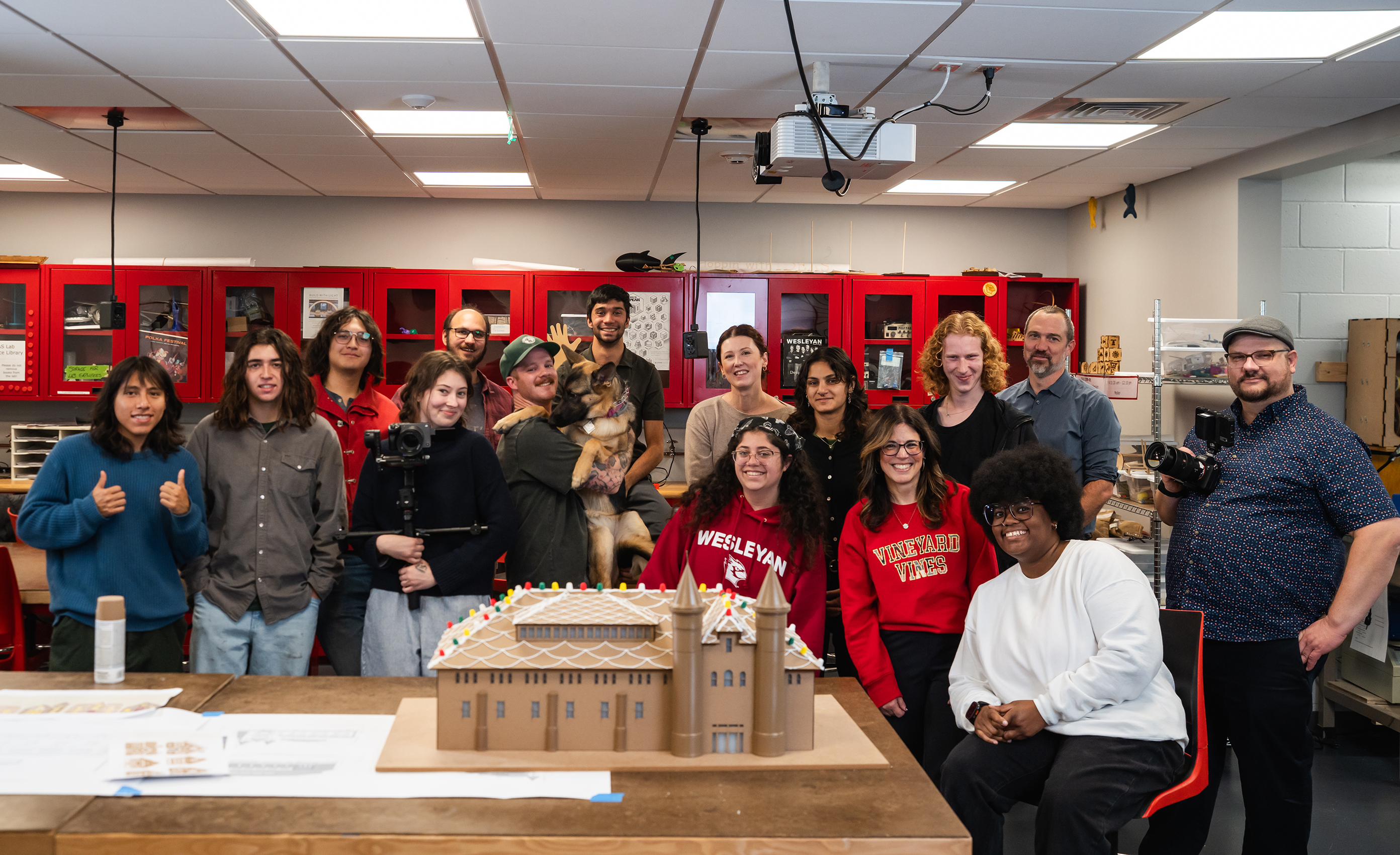
full team
The team behind the magic. Back row (left to right): Luke “Billy” Kim ’27, Ben Parker (makerspace coordinator), Arjun Menezes ’27, Serena Plage (CoDES), Leela Lotfi ’27, Orion Kolek ’29, Elijah Huge (CoDES director), Luke Haughwout (videographer). Front row (left to right): David Velasco ’28, Elias Kanteres ’28, Sylvie Moran ’25 (videographer), Will Richmond ’18 (DDS coordinator and technician) with Freya (“head of security”), Rachel Sapozhnina ’29, Jen Carlstrom (creative director), Meka Wilson (photographer),

Not pictured: Arielle Gold ’27, Oscar Hershkowitz ’28, Noah Lim ’27, Jacob Poore ’27, Juliette Sullivan ’27, Vin Wiemelt ’29


[an error occurred while processing this directive]